
40 ways to say hello: new pins greet transit riders in their language
40 ways to say hello: new pins greet transit riders in their language
Take one look around any bustling transit hub in Metro Vancouver and you’ll see a mix of people. From seasoned locals to tourists arriving on cruise ships and to newcomers discovering the region for the first time.
Now, imagine being one of some 400,000 daily commuters trying to navigate a transit system in a city when English isn’t your first language. You need help, but you’re not sure how to ask. Then, you spot a friendly face wearing a pin that greets you “hello” in your native language. Instantly, you feel a sense of relief and connection.
That’s the magic we’re aiming for with this initiative, a small gesture making a big difference for riders.
A simple pin with an impact
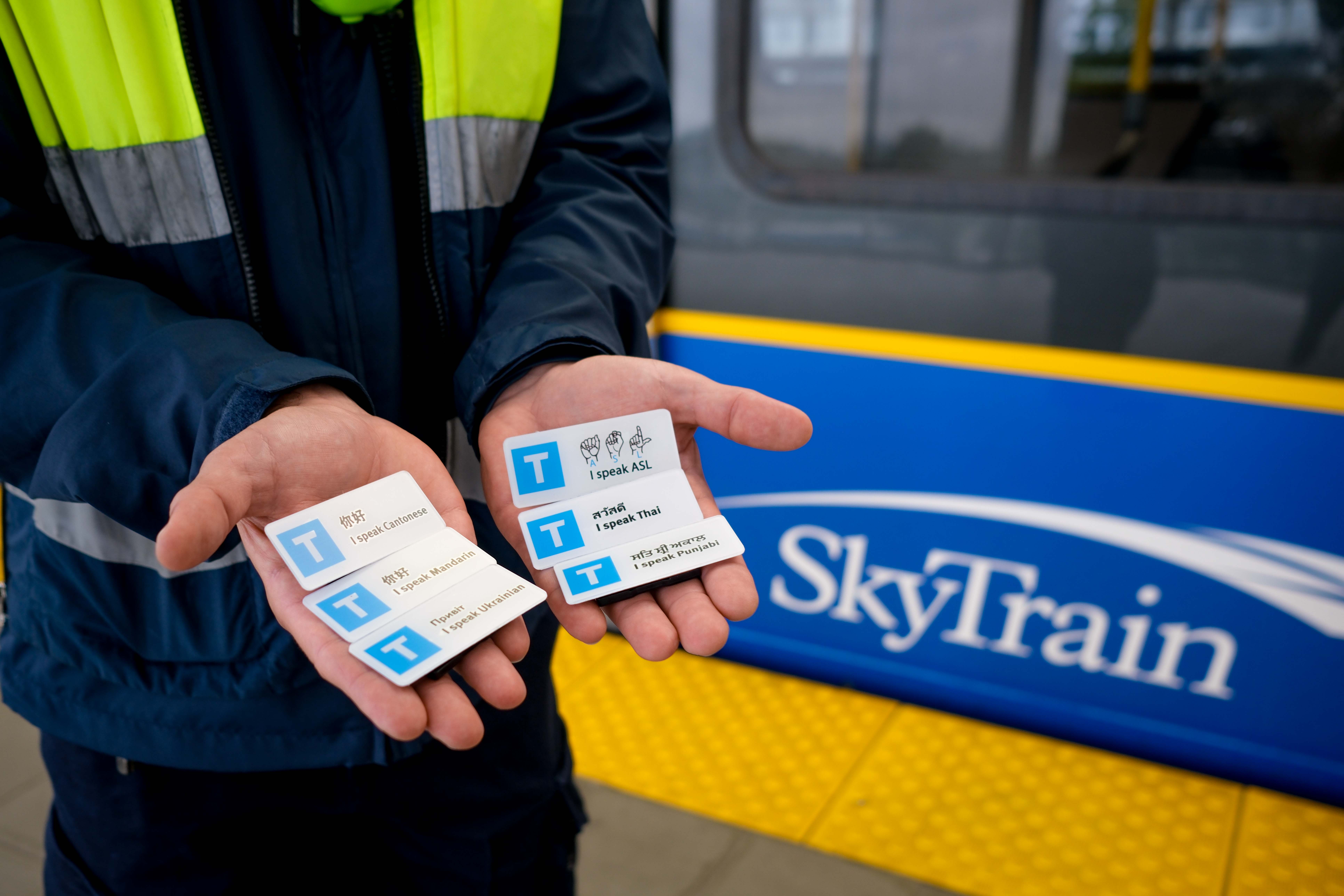
A growing number of frontline staff across our transit system, who speak an additional language, are now wearing pins that say “hello” in different languages.
This initiative helps customers, especially newcomers and tourists, feel more confident when asking for assistance in a language they’re comfortable with. Whether it’s giving directions, explaining fare products, or simply having a friendly chat, these pins make transit more accessible and inclusive.
Today, more than 150 frontline employees, speaking 40 different languages, are wearing a pin. The program continues to expand as more staff join and additional languages are added, ensuring even more customers feel welcome and understood.
Stories from the frontline
Our employees have already seen the positive impact of the project.
“People noticed the language tag and complimented it,” says Pritesh Patel, a Customer Service Representative at the TransLink Customer Service Centre. “I haven’t helped many people in my language, Gujarati — yet — but I’ve noticed my coworkers get a lot of clients asking for language assistance, especially with Spanish, Mandarin, and Punjabi.
“I do think the pins help clients with who to go to for assistance, and it is especially helpful to transit users.”
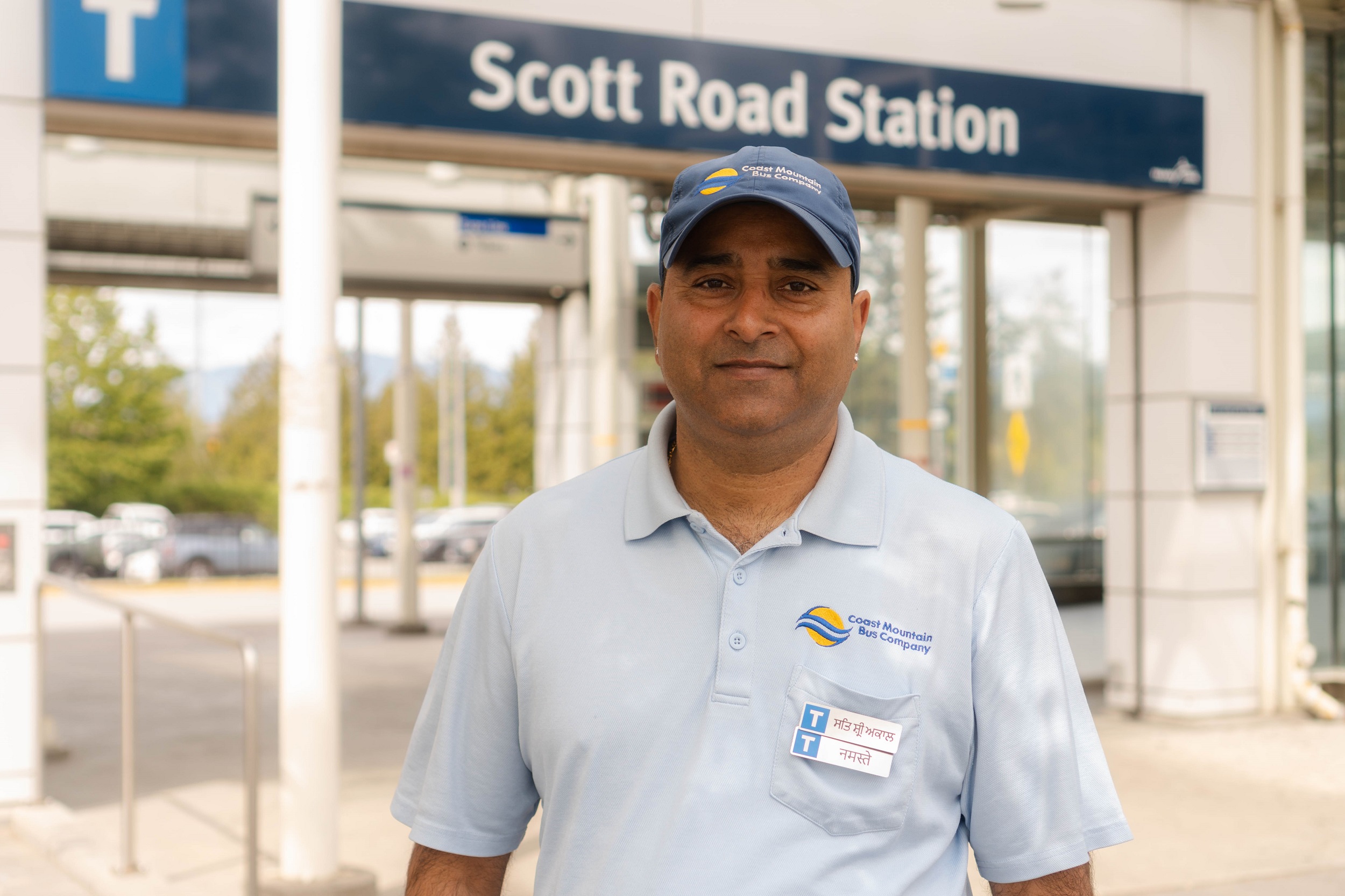
Anil Pathak, a Bus Operator, adds, “I’ve worked at Coast Mountain Bus Company for five years and I’ve seen a lot of people struggle with English. That’s why I signed up to wear a language pin.
“I speak Hindi and Punjabi, and there is a big South Asian community here. So, I am happy to help customers who speak my languages with which bus stop to get off at or make a connection, for example. I try to help people as much as I can.”
The TransLink enterprise’s iBelong Multicultural Employee Resource Group (IBM ERG) initiated this project in 2024 as a pilot, and the project is supported by TransLink’s Equity, Diversity, and Inclusion (EDI) team. The pins are a testament to our commitment to inclusivity, accessibility, and our dedication to serving our diverse community.
In 2023, we introduced help with transit information in more than 300 languages for our Customer Information phone line.
What’s next
We’ll continue expanding this initiative and growing our multilingual resources to make transit easier and more welcoming for everyone.
Because at TransLink, every hello matters.





What a waste of money! Canada’s 2 official languages are French & English. Not sure how to speak the english language, go take an english language class
What a fantastic use of money, in order to welcome multilingual residents, new Canadians, and visitors alike.
I don’t know why people are so threatened by other languages. They won’t hurt you.
Can you provide earlier bus route to UBC leaving Commercial Broadway? And Why R4 has earlier schedule? Broadway station is much busier route too.