


Why we repave bus loops: the hidden work beneath your ride
Why we repave bus loops: the hidden work beneath your ride
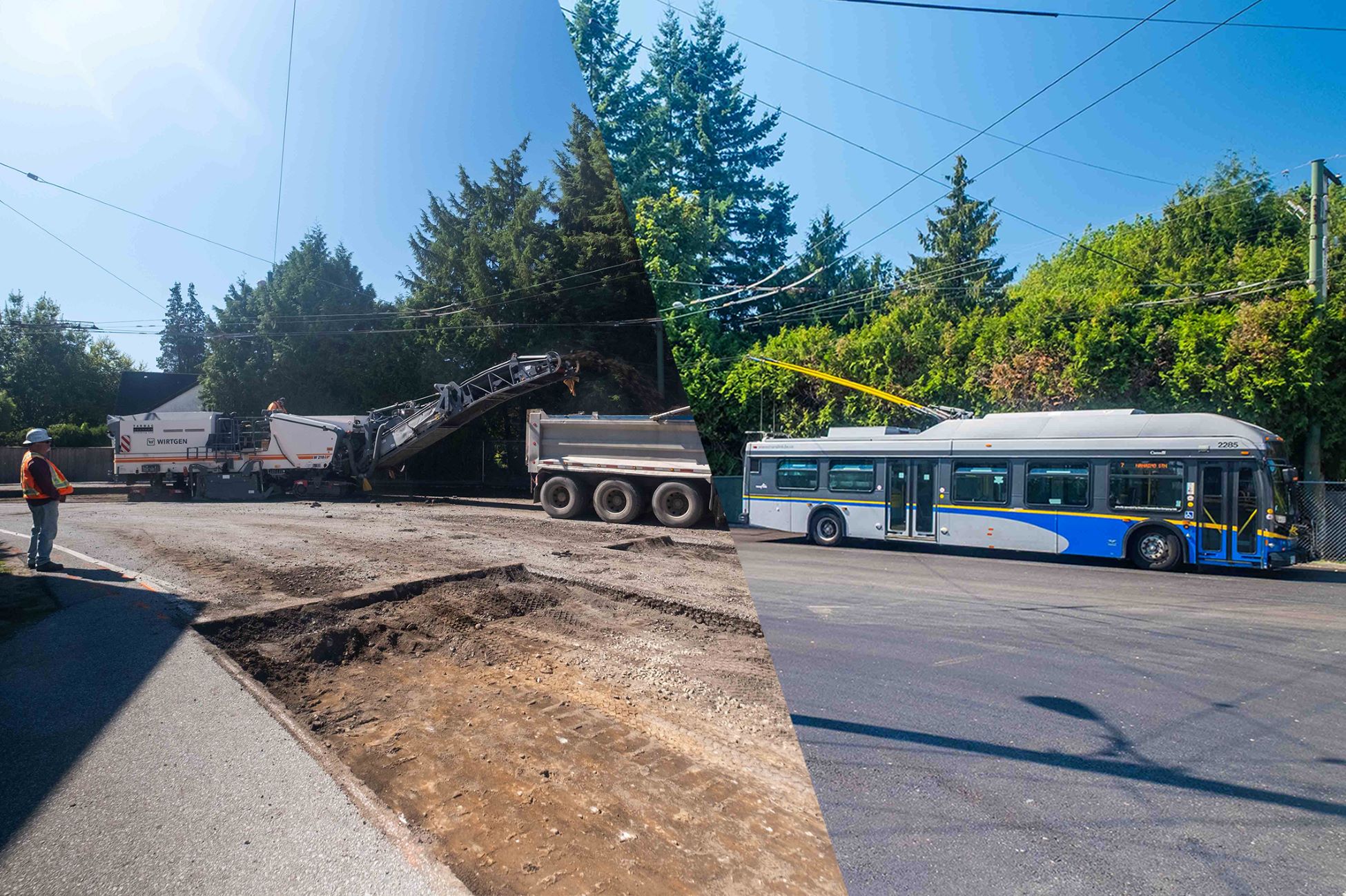
When you think about transit in Metro Vancouver, you probably picture buses, SeaBus, or maybe even the new Mark V SkyTrain. But what about the asphalt under those buses and waiting customers?
It plays a key role in keeping people moving.
Buses are heavy!
As ridership grows, buses can become very heavy. All that weight puts stress on pavement, which leads to cracks, ruts, and damage to the asphalt. Rather than completely replacing the entire road, we repave the top layer of asphalt as it’s faster, more efficient, and a fraction of the cost!
This summer we worked on a few of our busy bus loops including:
- Knight Street Bus Loop – July 2025
- Marine Drive Station Bus Loop – July and August 2025
- Dunbar Loop – August 2025
After rehabilitation, the fresh asphalt will last up to 10 years – quietly serving the moving public for years to come.
Did you know? Repaving only happens during the summer because new asphalt needs warm, dry weather to fully cure.
Why we repave bus loops
We know encountering construction on your commute can be inconvenient. However, taking care of our bus loops is one way we keep Metro Vancouver moving.
Here are a few of the benefits to a well-maintained bus loop:
- Bus rides to and from bus loops are smoother! This means a lower chance of fall-related injuries for passengers.
- Fewer cracks and bumps mean fewer tripping hazards – plus a smoother journey for customers with mobility devices like wheelchairs and strollers.
- Bumpy rides can damage our fleet. Smooth pavement helps reduce the maintenance costs of our buses.
- We are repairing minor damage before it becomes major damage. This helps bring down the cost of future bus loop maintenance.
Next time you’re at Dunbar Loop, look down at the fresh pavement! Check out this 60-second look into why we repave bus loops – and find out how many elephants a fully loaded bus can weigh!