

How frontline work helped launch Kyle’s transit career
How frontline work helped launch Kyle’s transit career
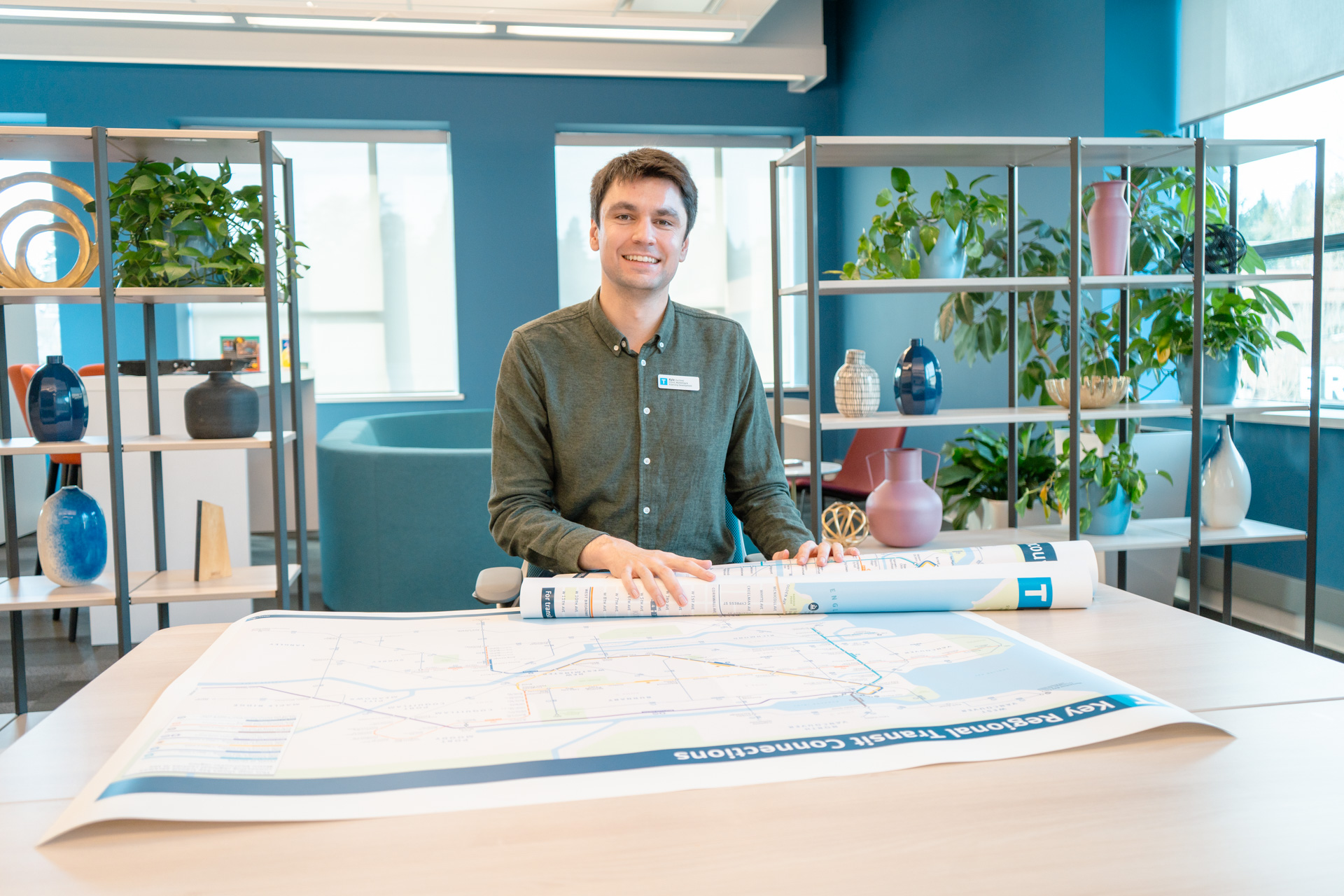
When Kyle Monda graduated from the University of Alberta, he knew two things: it was time to return home to Metro Vancouver and it was time to start his career.
But without co-op experience, Kyle felt he might already be behind the eight-ball compared to some of his peers. Co-operative education gives students the chance to apply what they learn in school through paid, hands-on work experience with employers like TransLink.
Kyle wondered if he needed to return to school to earn a graduate degree. However, it didn’t feel like the right way to get the on-the-job experience that employers look for.
A lifelong transit rider and fan, Kyle started thinking a career in that industry.
“I wanted a career that aligned with my values and the transit industry certainly did,” says Kyle, adding TransLink was emerging as leader in North America in 2019. TransLink had just earned Transit System of the Year — a prestigious distinction awarded by the American Public Transportation Association.
“Public transit reduces greenhouse gas emissions and connects people to economic opportunities and education,” says Kyle. “It’s a mission you can feel good about contributing to.”
So, he started applying at TransLink. Both as a transit operator with Coast Mountain Bus Company and as a SkyTrain Attendant with British Columbia Rapid Transit Company.
What he did not know then was that this decision would become more than just a detour, but a road towards a meaningful career in transit.
A job with a purpose
Every day in Metro Vancouver, nearly half a million people rely on transit to get to work, school, and the people and places that matter most. Those journeys help make Metro Vancouver one of the most livable places in the world and support a thriving economy.
That sense of purpose is what draws so many people to a career in the transit industry, but just as many may not know where to start, Kyle explains. He says this is especially true for young people who may not feel they have the education or experience the transit industry is looking for.
The good news is there is more than one path into a career in transit. For some, it starts in frontline operations, which are roles out on the transit system with a focus on supporting customers riding transit.
At the TransLink enterprise, that can mean working as a SkyTrain Attendant, SeaBus Marine Attendant, Customer Information Agent, or bus operator.
With a background in supporting students living in residence at the University of Alberta, the SkyTrain Attendant role was a natural fit for Kyle. Attendants are responsible for providing customer service at stations and responding to issues with trains.
Why operations experience is in demand
A joint York University and Toronto Transit Commission study found that while Canadian engineering and planning programs provide strong foundational transportation theory, students often graduate with limited exposure to the realities of transit operations, service planning, and scheduling.
This has created an interest from transit agencies for candidates that have operations experience.
For Kyle, working as a SkyTrain Attendant and then later as an Operations Clerk — where he administrated permits for work happening on the SkyTrain tracks — helped him build practical and transferable skills.
This experience helped him move into his current role of Fleet and Facility Wayfinding Planner on TransLink’s Customer Experience team.
As a wayfinding planner, Kyle researches the customer journey and develops plans for signage, maps, and navigation across SkyTrain stations, SeaBus terminals, bus exchanges, and onboard transit vehicles.
Good wayfinding often fades into the background. When it works, customers can move through the system with little thought or effort.
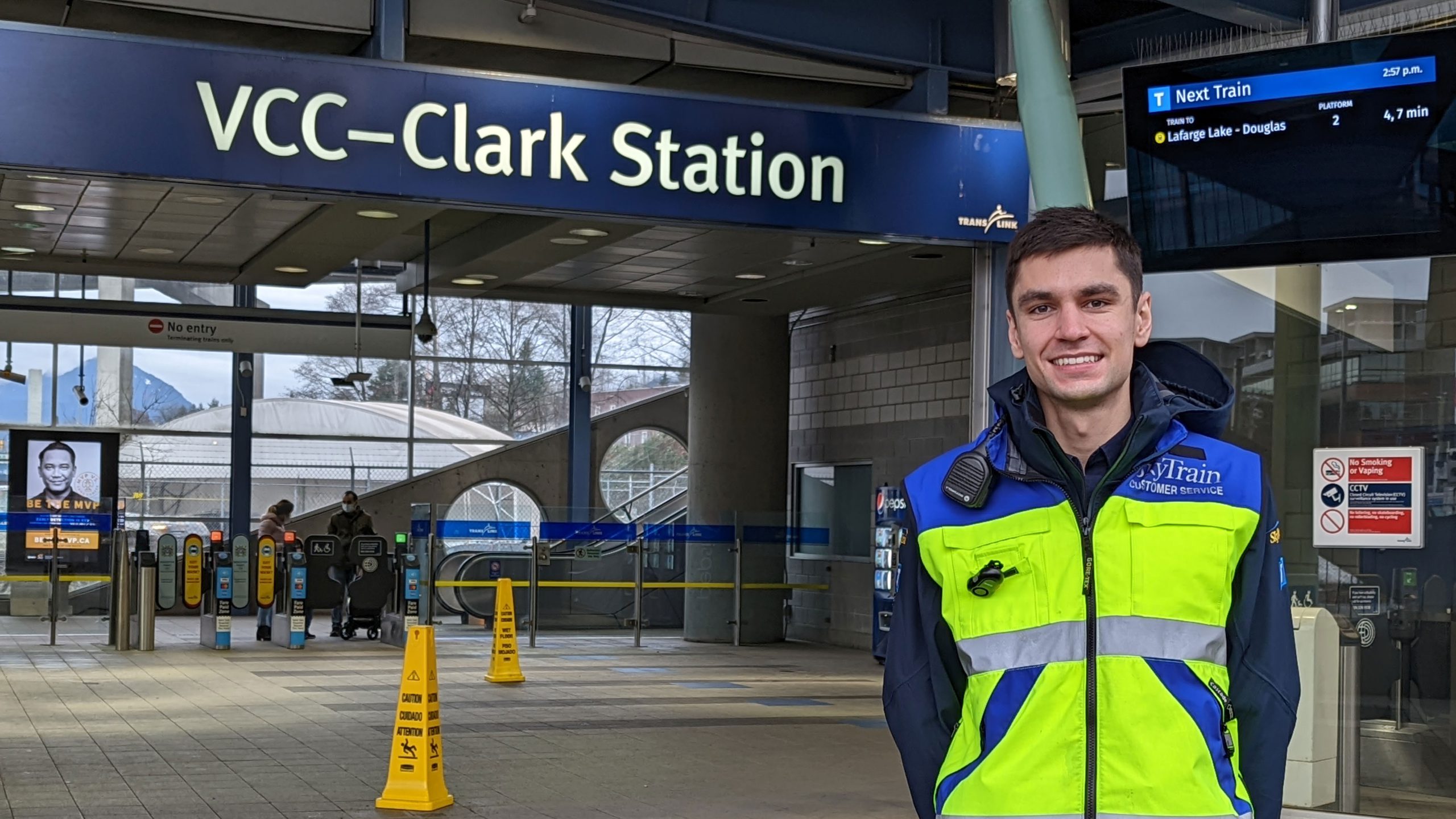
Kyle says his frontline experience as a SkyTrain Attendant gave him a perspective that directly shaped how he approaches that work.
“You get a different understanding of customer experience being at Commercial–Broadway five hours a day, every day that you don’t get from simply riding the system,” Kyle explains.
“For example, working on the frontlines, you learn first-hand how customers on their daily commute to work have different needs than customers going to a special event downtown. They may need extra help finding their way for an unfamiliar trip.”
With this knowledge, along with the Bachelor of Arts in design and visual arts, Kyle was able contribute to projects like service changes at Braid and Sapperton stations in support of the SkyTrain Expansion Program.
Understanding the track layout and how trains travel through the area helps me plan better resources for customers. Customers may not realize trains can travel in both directions on the same track; like a one-lane road on a construction site. The new station signage provides simplified guidance with platform numbers, matching what they see on the digital screens.”
Start by putting your hand up
Kyle is quick to say this path is not the only path and that charting your own starts with putting your hand up.
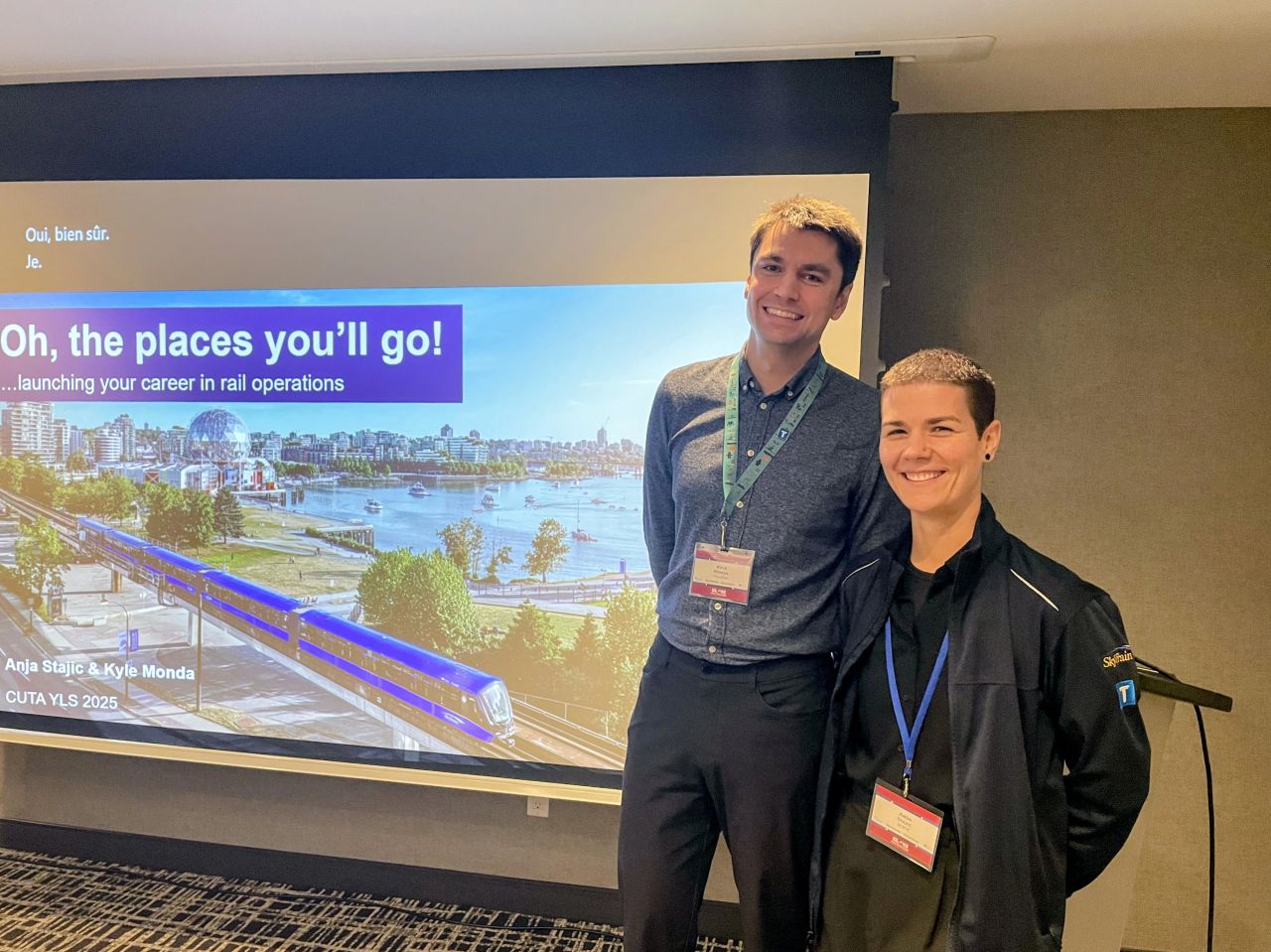
“My co-presenter Anja Stajic from [SkyTrain] put it best: you have to build your own growth,” says Kyle. “Volunteer for projects, accept lateral moves, and step into roles that stretch your comfort zone.
“That can feel risky, especially early in your career. But that’s how you’ll learn and grow.”
Kyle is also clear that a job in frontline operations is not a one-way ticket to moving into corporate roles and a career in transit.
“You can’t coast,” he says. “Think about it as going to school. I learned a lot in the classroom at the University of Alberta, but I learned just as much on the job at SkyTrain.
“You’re going to have to put in 110 per cent and really put in the time and effort into excelling at it for a couple of years before even considering other roles at the company.”
This is a message Kyle carries with him as part of his broader work with the Canadian Urban Transit Association’s Youth and Emerging Leaders sub-committee. The group aims to encourage and develop the next generation of transit professionals.
For his efforts, Kyle was recognized for being an emerging leader in Canada’s transit sector earning Young Leader Award from the association. He also active in and promotes inclusivity as part of TransLink’s Pride and Allies Employee Resource Group.
“I was looking for a career where I could make a difference, and I know a lot of other youth are too,” says Kyle. “I hope they might be inspired to consider the transit industry.”
For anyone wondering whether frontline operations are worth it, or whether they have missed their chance, Kyle’s story offers a clear answer: there is more than one path into a career in transit.
You just have to take the first step.
Want to be a SkyTrain Attendant like Kyle? Apply by April 1. The SkyTrain network is growing, and we’re hiring new team members to power this expansion. Your journey starts here with SkyTrain. Learn more at translink.ca/skytrainjobs.