

TransLink Podcast: How are we speeding up the humble, everyday bus?
TransLink Podcast: How are we speeding up the humble, everyday bus?
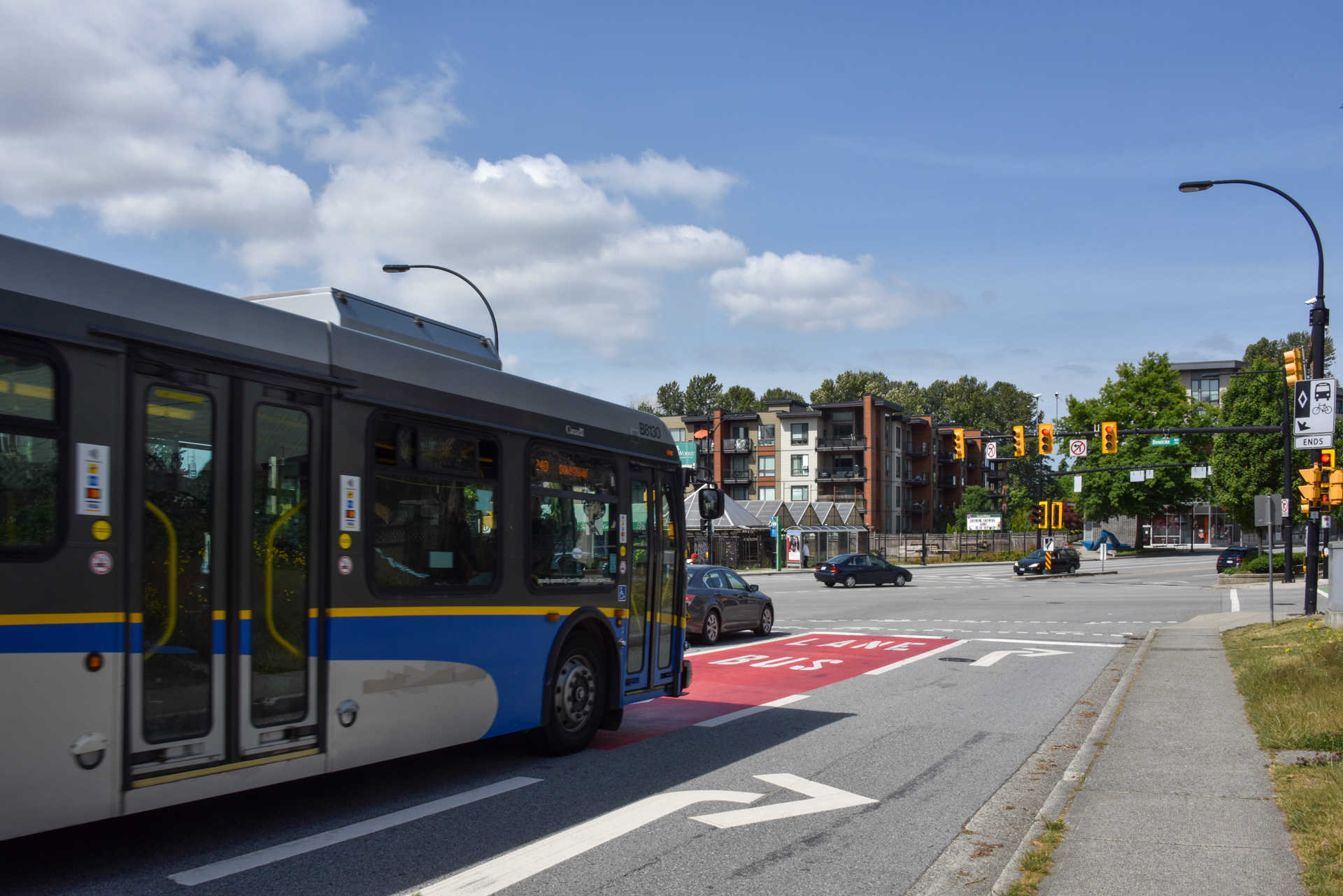
Buses are the workhorses of our transit system and wider transportation network. They carry about two-thirds of riders each day. And on the busiest roads, buses are responsible for moving up to 60% of people. So, making it better is crucial.
Come behind the scenes with us as What’s the T: the TransLink Podcast with Jawn Jang reveals the voices and stories that drive Metro Vancouver’s transit system forward. Subscribe and listen everywhere you get your podcasts, including Spotify, Apple Podcasts, and Pocket Casts!
Transcript

HOST JAWN JANG: Hey, welcome to What’s the T: the TransLink Podcast. I’m your host, Jawn Jang. Here’s what we’re checking out on this episode.
[AUDIO EXCERPT FROM “I LIKE TO MOVE IT” FROM MADAGASCAR PLAYS]: I like to move it, move it. I like to move it, move it. You like to, move it!
JAWN: How is TransLink speeding up the humble, everyday bus? Let’s tap into What’s the T.
VOICEOVER 1: The next station is…
[INTRODUCTION MUSIC PLAYS]
VOICEOVER 2: Welcome to What’s the T: the TransLink Podcast.
JAWN: The TransLink fleet is big. It seems obvious, right? But let’s do the math here. We have five West Coast Express trains with about eight cars each. And then there’s the four SeaBuses in our fleet, and we have well over 300 different SkyTrain cars, ranging from, of course, the Mark I to the Mark II and the Mark IIIs.
But even if you added up all of those vehicles that I just mentioned, it pales in comparison to our bus fleet. With over 1,600 busses serving Metro Vancouver on a cross, over 200 routes, basically, if this were the Avengers, the bus would pretty much be the Hulk because of its sheer size, its strength is acting as the workhorse of the TransLink system. But instead of a Hulk smash, it’s more of a:
[AUDIO EXCERPT FROM SETH ROGEN VOICING SKYTRAIN ANNOUNCEMENTS]: Hey, Vancouver! Here’s a tip to make your transit ride even more awesome.
JAWN: Yeah, one of those. But all of this highlights how important it is for us to make sure that busses are running as efficiently as possible. After all, if our busses were just stuck in traffic all the time, it really wouldn’t matter if we added another 1600 busses to the fleet, because customers like yourself would just be waiting and waiting and waiting. And nobody likes that.
But there are very clever ways for us to ensure that your bus is arriving on time, and ideally, even ahead of schedule. Some tips and tricks are more noticeable than others, but they all work together as something that we like to call bus priority measures. So to that end, let’s quickly debunk one of the most common misconceptions about bus lanes and why they seem to be empty during rush hour.
VOICEOVER 3: Have you noticed the new bus lanes rolling out? We’re building these where they’ll make the busiest bus routes faster and more predictable, making it easier to plan your day. Sometimes these bus lanes may appear empty, but in fact, those lanes are working hard. They can move more people than a regular traffic lane. A typical car carries 1 or 2 people, but that bus, it may have 50 people on board.
Bus lanes are a more efficient use of the road, especially when they help busses move faster. And when busses are faster, you can run them more frequently over time. Improvements like these can make transit a more attractive choice than driving, reducing the need for more vehicles on the road and helping us get the most from limited road space. So next time you see an empty bus lane, remember it’s more than just a bus lane. It’s a path to more efficient, reliable and affordable transportation.
And with more bus lanes on the way, we’re just getting started. To learn more, visit translink.ca/buspriority.
JAWN: Now, to help explain this further, we’re bringing in the expert.
DAVID: So, I’m the manager of bus priority planning and monitoring. And so what that means is that I work on creating the policies and ultimately the projects that help busses move faster and more reliably on streets throughout the region, throughout Metro Vancouver. I’m, I’m an urban planner, specializing obviously in transportation planning. It’s something I’m really interested in, really passionate about. And, really making sort of the our cities are regions, great places to live and easy places to move around. And so, of course, I do things differently every day. I’m working on different types of tasks and assignments and projects. But ultimately, it’s really about with that ultimate goal in mind, right?
It’s about how do we move people more efficiently, on streets throughout the region and, a few other things too. Like, goods movement is really important to, we realize, a very important part of the economy. So when we’re making decisions about how do you space on our streets, it means that we’re thinking about those things, too, right? Where we’re thinking about how do we do this in a way that we’re also allowing trucks to make their deliveries? That we’re also allowing people to walk and ride their bikes. So we have to think about all these different functions that streets have.
JAWN: The first question is pretty simple. I’ve already mentioned it. So maybe you can take us and walk us through what exactly is the empty bus lane myth? What is the misconception that people seem to have around this?
DAVID: So I guess it’s when people are looking at how vehicles are moving on a street, right? You see how empty or full the street is. And you might see that there is a bus lane that’s marked, but there seems to be nobody in it. There are no busses. People might wonder, why is this a bus lane if there are no busses around?
JAWN: Interesting, because I think I have a real life example of this. I’ve lived, predominantly in the city of Vancouver for the past like ten years. Most recently moved, but regardless, West Georgia, a very busy street, one of the busiest arteries within downtown Vancouver for people trying to get to and from the North Shore. If you just need to cut through the downtown area. We know that there are bus lanes on both sides of West Georgia, and I feel like this is a hotbed of activity sometimes because, people look over and if you’re stuck in afternoon rush hour, it’s so tempting to be like, oh, if I just slip into this bus lane that seems to be empty. I can skip all these cars. But why is it not allowed and not permitted? Not a good idea for cars to be using a bus lane, even if it looks to be empty.
DAVID: Yeah, so that’s a good question. And certainly if you’re looking at any given moment and you see this empty bus and you might wonder that, but also think about the fact that, a bus can carry the equivalent of, let’s say, 30 cars of people. So we’re trying to move people efficiently on streets. And so how do you do that? By making the best use of the space that you have available. And so, you know, you might glance and one minute, one second you look out there and there’s no bus in the bus lane. But the fact is that there are actually many busses moving there. Every few minutes, every hour and moving a whole lot of people when they do that. So, ultimately it is a more efficient use of space on the street. And, so where we have bus lanes and where we have frequent service, that means busses every few minutes. They’re actually helping to make that lane, that street operate a lot more efficiently.
JAWN: Is there some truth to the notion that as you’re sitting behind the wheel of your car, you’re stuck in traffic, you look over, you see a bus by, drive by you in the bus lane, and maybe an idea gets planted in the back of your mind saying, that could be me. I could be on that bus right now. Instead of having to deal with this bumper to bumper traffic, that’s not going to get any better for the next 40 minutes or however long it’s going to take you. So just the pure visual of that bus driving by, it can be pretty convincing enough on its own.
DAVID: Yeah, and that’s the whole idea, right? Where you have bus lanes, where you are really improving that public transit experience. You’re making it a more comfortable ride for everyone taking it. And the better you make public transit, the more people will ride it, and the more busses we can actually put on that street in that bus lane or otherwise. And that means we’re moving more people more efficiently. We’re also creating more space on the street for many different types of vehicles, for people to get around many different ways.
JAWN: You mentioned the colored, bus lanes that some I do. We have a few of those in Metro Vancouver, if I’m not mistaken. I believe there are portions of West Georgia, for example, that’s red to give you the visual sign that, hey, maybe I should not be driving here in my car right now. But also to your point, signage. So it seems like there’s a mix sometimes of the tactics you’re trying to roll out in order to really let people know these are dedicated bus lanes. So it signs. Lines? What other tactics, are you trying to come up with or that have worked in the past to maybe just let people know that these are bus lanes and they’re supposed to stay empty, only for busses to go through when they can, right?
DAVID: So, you see, so you mentioned it lines and signs is the term that we like to use for these types of projects. Right? We’re basically, you know, we’re not these are engineered solutions, but they’re pretty simple. In terms of if we’ve decided that we want to implement a bus lane, that it makes sense on a particular street. Basically it is lines and signs. We go out there, we can we can paint some lines on the street, we can hang up some signs, and they basically tell people this is a bus lane or, you know, we can paint the lane red or parts of it red. And that’s also a clear signal. It’s really important to be very clear, who that lane is for because there’s a close cousin, I guess I would call it, of the bus lane called a high occupancy vehicle lane, each of lane, so.
Or a carpool lane, in simple terms. So, what that does is it allows vehicles with higher occupancy so it can be signed and marked. So it’s, you know, two or more people per vehicle or three or more people per vehicle. And basically that also can help to improve the efficient, movement of people on a street. It doesn’t provide exactly the same level of priority, though, as a reserved bus lane. So generally, when you see those signs or the pavement markings and the text on the pavement, it might say bus only, that’ll make it very clear that it’s for busses only, obviously nobody else, on the sign as well. At the bottom of the sign, it might have a bus only tab. And that means this isn’t an HOV lane. It’s a bus only lane, and very clearly marked that way. So that’s that’s a very important part of the the whole project and the whole setup.
JAWN: As well makes a lot of sense. And obviously, you know, when we think about bus lanes in general, we have to remember too, these are not magic bullets. They’re not going to solve congestion entirely. They’re not going to get you instantly to where you need to go. But it’s part of a greater strategy with what you mentioned. Bus priority measures. I lived on Robson Street. And I noticed that at Robson and Burrard, as you’re turning from Burrard onto Robson, there’s a bus stop there, but it’s position now, in a way where the stop comes all the way out and it meets the bus with where it is, instead of the bus having to then turn into the stop and lose its place in where it would be in traffic. What is that called, and why is that the solution to helping with some of the congestion issues?
DAVID: Sure. So, so we call those a few different things, but most often bus bulbs. So a bus bulb is a curb extension, which is exactly what you’re talking about. Right? So the curb is extended out. So it goes right to where the bus is moving. And what this does is it saves busses time so they don’t have to pull in and out of traffic to serve the stops. Right. So you can have, you can have a bus bay, for example, where the bus pulls out of traffic to serve the stop at the curb. Then it pulls back into traffic. So all of that time pulling in and out, causes a delay to the bus and impacts the service. So the idea with bus bulbs is that the bus is not, moving in and out of traffic all the time. That’s saving a time. That’s helping it operate more reliably.
JAWN: And maybe just an unintended benefit is that it’s creating more space for, customers to wait as they’re, you know, waiting for the bus to arrive. And maybe that’s also something to keep in mind for, like, accessibility reasons. You might have, more benefit there, too. So I thought that was kind of neat. And just my observance is living on Robson Street. It’s made, I don’t know, it just it’s made it more attractive to to just get on the bus now, because I suppose Robson is it’s single lane traffic all the way down up until you get to Denman. So I’ve noticed sometimes that cars won’t even let other parked cars that are trying to squeeze back into traffic, like people don’t want to lose their spot in line. So a big 40ft bus sometimes I can see someone having a real dilemma be like, do I be a good person and actually let this bus through? It’s technically the law. Or do I want to keep my spot in line and let the person behind me deal with it? Right?
DAVID: So well, yeah, it is the law. You do have to yield to busses when they’re they’re pulling in and out of stops at these places. And like you said also it, it creates more space for pedestrians. It could create space for, in front of stores for kind of retail areas. And that’s where these are the most popular, these bus bulbs. And essentially your, by creating, using this curb extension, by creating a bus bulb, you’re also effectively widening the sidewalk, right, because you have the bus passengers giving them another area to wait in. They’re not in the way of pedestrians. They’re not blocking the sidewalk. So, you know, we don’t have a lot of space. We don’t have a lot of money. But here’s here’s kind of an easy way to to effectively widen the sidewalk.
JAWN: David, we know bus lanes are just one option to to have in the toolbox. That is bus priority measures. Maybe you can, explain to us and walk us through the full list of measures and how they all kind of work together to provide more efficient and reliable bus service.
DAVID: Yes. Of course. So, so bus lanes are one tool. We do have other tools that we use, other bus priority measures, and often they’re used in combination. So, one project, one route may actually make use of many of them. So bus lanes are one example. Another tool that we, can use that perhaps we’ll be using more of in the future. Is transit signal priority TSP. So this means that we’re changing signal timing to give more green time to busses. That helps them get through intersections that can help them bypass some traffic that can help result in more reliable service. And that can be, at isolated intersections, or it can be at many intersections. Along a route or a corridor.
Additionally, things like queue jumps. So queue jump is really a very short bus lane at an intersection. And it really just helps those busses get past, congestion so they pull ahead of traffic. They may also be, supported, aided by a signal. So there may be a traffic light there. TSP, that helps them or a bus only signal, that helps them get to the other side of the intersection to serve the stop. And so, queue jumps are also very useful, and they can be implemented at select intersections, like, there may be just a few very congested intersections on a route, where a queue jump is helpful, you may not really need it or have the space for it at other intersections.
Another one is bus stop location. Or bus stop consolidation or bus stop balancing, as we also call it. So that means really going through and looking at, the locations of all the bus stops on a route and thinking, where are they actually most useful, these bus stops, where are they most needed? And maybe there’s an opportunity to consolidate some of those stops. And if you’re able to do that successfully, it means fewer stops on everyone’s journey. It may mean, in a few cases that people have to walk a little bit farther to get to their nearest stop. But if you take into account that their journey will be faster once they’re on the bus, it actually could work very well. And then we’re often working with our local government partners on, how we’re using those lanes for other things. Right? Because there’s parking that happens during certain periods of the day. Right. And there’s other times, traffic moving through those lanes.
And so we work with our local government partners on those things, on parking and traffic regulations. When do we want to use a lane for, movement? And is that for all traffic? Do we create a bus lane? And when is there really not a need for that? And we can keep it for parking for part of the day. So we consider all those things, all those are different tools that we can use. Different forms, a bus, pretty measures. We can we can restrict turns at some intersections. If that also helps the flow. So we do we do all of those different things.
JAWN: I have two thoughts listening to you say all that. One, it must feel really good as a bus driver when you’re in like afternoon traffic and you just get to breeze by everyone, you feel like a king or queen just owning the road because you got nothing but freedom. When you’re in a bus lane, it must feel really cool. Number two, when you implement these bus priority measures successfully, not only do customers get the benefit by having a more efficient service, David, but we as an organization get the benefits because it wasn’t that long ago we introduced and created a brand new bus route by using savings that came from a successful bus priority measures that reduced operational cost for small bus companies. So we were able to create a brand new bus route out of that. And that route is now route 80. So I think that’s really cool too. Not everyone might see the bigger picture. When we get these things done, we might be able to create some really new cool new features for you with the with the savings that we get out of all this.
DAVID: And that’s a very good point too. Right? So we are talking about we talk about customer experience a lot, and we talk about the fact that we’re improving journeys for bus riders. But it is more than that, right? Where I think everyone knows that there is a very high cost to the delay, to the traffic congestion that we experience in Metro Vancouver every year. You know, we’re adding millions of dollars in operating costs to deal with that. And part of what we’re trying to do with these bus priority measures is sort of chip away at that cost and reduce it. Right. And, so we are able to, bring in operational cost savings if we can make the busses move faster and more efficiently. And what can we use those savings for? Well, as you mentioned, we can actually create a new route, with the operating cost savings that we achieve. Other things we can do are, improve frequency, for example. So, you know, maybe with some of those cost savings, we can actually provide more busses, provide more frequency on a route. And I think that’s always appreciated. So we can we can then use those busses, either on the same route or on another one if we’re able to create a new one.
JAWN: And the beauty of what we’re talking about here today, David, is that it’s not brand new stuff, like a lot of this stuff has had, previous successes in Metro Vancouver. I mean, we can talk about our line of rapid busses, rapid busses are designed with a lot of these bus priority measures already in place. As we take a look into the future. TransLink, one of the things we want to deliver to Metro Vancouver is bus rapid transit and taking those bus priority measures even one step ahead, one step further, and implementing protected bus lanes so that we can make sure that, customers are being able to rely on that efficient service as much as possible.
DAVID: If you look at existing, routes, you mentioned Rapid Bus, right? We have we have many rapid bus routes at this point. The R6 Scott Road rapid bus route, is the newest of those. It is the latest, and that’s a good one to look at. If you’re trying to understand how could bus rapid transit or BRT really change things in this region and change streets? So that’s a good example where, a lot of features have been incorporated in this sort of bus priority or on the way to to bus rapid transit. And so there’s, a good part of that route. 38%, actually, is a bus priority lane. So, so busses have a lot of space dedicated mostly to them there, and that’s where they operate really efficiently. And they operate very well. Certainly there are other features there as well. There are, queue jumps, for example. You know, there are changes to parking and traffic regulations, changes to signal timing. And so all of these things can improve, the experience of bus riders can improve the efficiency with which streets operate and busses move. And you see many examples on Scott Road of that on the R6 route. But yeah, we hope to be doing more of all of those, in other in other places as well.
JAWN: Last question. You know, the one takeaway that you really want people to leave this conversation with when it comes to bus lanes or bus priority measures in general, if there’s one thing that you would like them to share with friends and family over the dinner table, what would be the one message you want them to take away from from all this?
DAVID: I think probably the most important message is that, it’s important to experience, what we’re doing with these bus priority measures. I think it’s, you know, as I think you said at the beginning of this conversation, it’s not always clear when you just glance at what’s happening on a street, what’s really going on. You might get a picture in your mind that no one is moving anywhere, because there seems to be an empty lane, right? Or the cars aren’t moving, or the street just doesn’t work. When you really zoom in, you experience it. You ride that bus in a bus lane. You really look at the numbers and you realize that, you know, actually, this this is working better than it did before. You know, there is a point to doing all of this. And, and it’s not, again, one size fits all solution. Bus lanes are great, but as I mentioned, we do other things too, and they’re appropriate in different places. I think just trying to get that understanding, of what’s actually, you know, what the experience is like, what’s actually happening on the street. It’s not always obvious from that snapshot. Right. Trying to understand it a bit more deeply. I think that’s that’s really important. And hopefully if people are able to do that, then, you know, they can understand, they can support these types of projects. They can they can get on board those busses. Right. And they can they can experience the better service we’re able to provide.
JAWN: When I was young, my Saturday morning cartoons might have included a rerun of The Jetsons, a classic and their promise of a future with talking robots, consumer grade jetpacks and flying cars. Now, alas, the hard reality is that in 2025, we’re not there just yet. So until those flying cars and presumably flying busses become a reality, TransLink and other transit agencies around the world employ bus priority measures to speed up the bus to get you from point A to point B faster and more reliably. And the best part is, as technology improves and as new practices are discovered, these methods can change and become even more innovative. The tactics that we use today could look drastically different to what we can do eventually down the road, and the promise of a future with busses that will make you feel like you’re using a jetpack.
Anyway. So, my thanks to David Kuperman and the entire Bus Priority Planning team at TransLink. A lot of their work is done behind the scenes, but they play a key role in making sure that your next bus trip is that much more reliable. And of course, on time. Now, my thanks to producer Allen and producer Sydney for their reliability every single day, working on this podcast and keeping us on time. And of course, my thanks to you for listening and subscribing. I’ve been your host, John Yang, and until next time, have a safe trip home.