

TransLink Podcast: How does the MTR in Hong Kong design memorable stations?
TransLink Podcast: How does the MTR in Hong Kong design memorable stations?
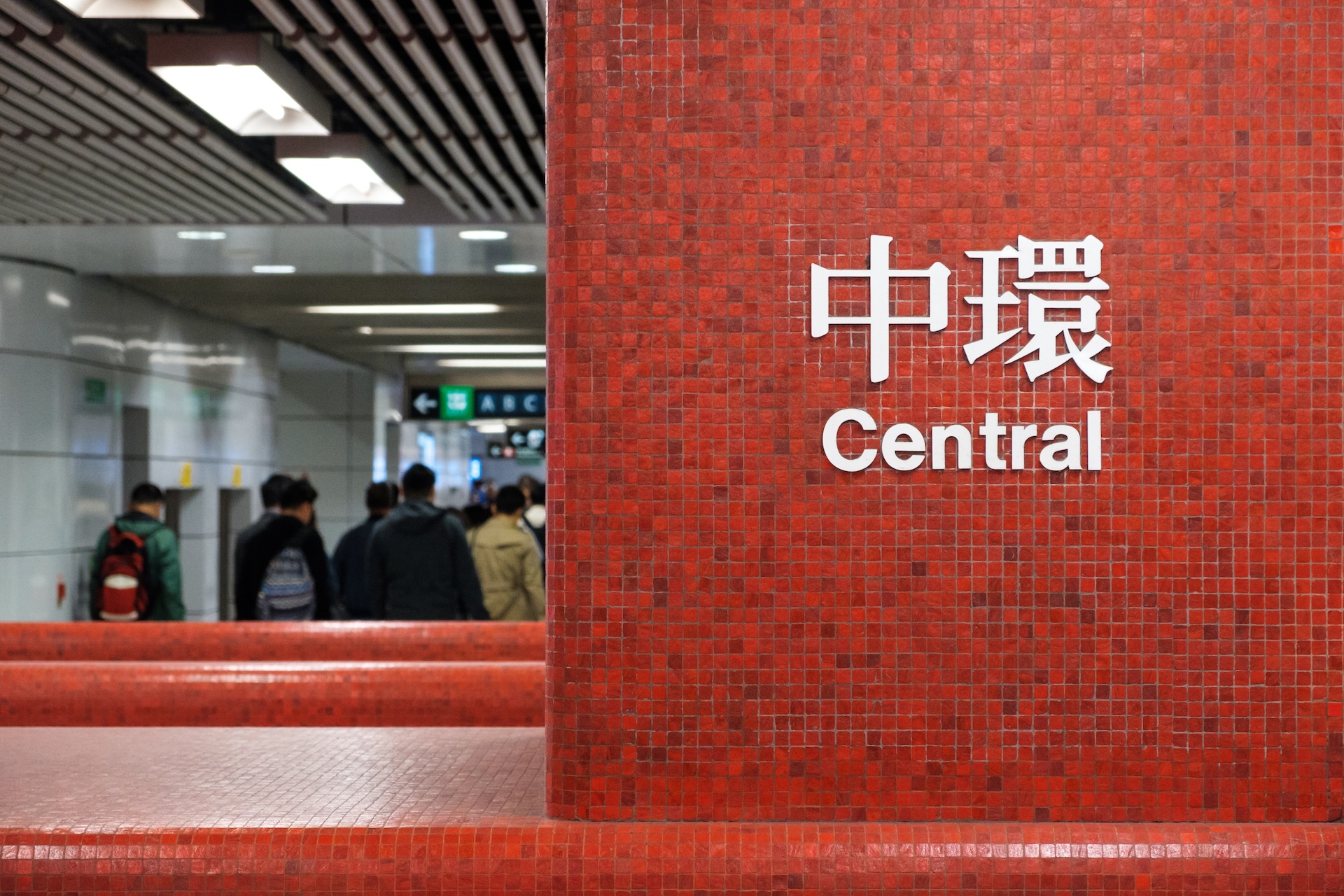
We delve into the fascinating world of transit architecture at the MTR in Hong Kong. Discover how art and design transform transit stations into vibrant community spaces, enhancing the daily journeys of millions of passengers.
Come behind the scenes with us as What’s the T: the TransLink Podcast with Jawn Jang reveals the voices and stories that drive Metro Vancouver’s transit system forward. Subscribe and listen everywhere you get your podcasts, including Spotify, Apple Podcasts, and Pocket Casts!
Transcript
HOST JAWN JANG: Hey, welcome to What’s the T: the TransLink Podcast. I’m your host, Jawn Jang. Here’s what we’re checking out on this episode.
UNKNOWN VOICE: Dear God, it’s beautiful.
JAWN: How do we make transit stations beautiful and memorable? Let’s tap in to What’s the T.
VOICEOVER 1: The next station is.
[INTRODUCTION MUSIC PLAYS]
VOICEOVER 2: Welcome to What’s the T: the TransLink Podcast.
JAWN: We’re doing something a little bit different in this episode. Instead of just staying local to Metro Vancouver, we’re grabbing our passports, getting on a plane, and traveling to Hong Kong. Okay, not actually, but Hong Kong. Often considered a crown jewel in the world of public transportation, the Hong Kong Mass Transit Railway System, or the MTR, is an industry leader in a lot of different ways. For example, if you were to take one step into any of the MTR stations in Hong Kong, you’ll immediately notice how visually pleasing they are. Beautiful artwork decorates station walls, murals will tell beautiful and thought provoking stories, and there seems to be no wasted space as these stations serve a variety of different functions for their customers. We had the chance to sit down and chat with the person who helps design these spaces when he visited Vancouver, and his name is Andrew Mead. Now, at the time of the recording, Andrew was the head of Architecture at the MTR. He is now a transit design and architect consultant with Meada Design based in Hong Kong.
ANDREW MEAD: The job role is pretty broad, but basically it starts off with being head of architecture, designing the new stations that we’ve got under design and construction right now. Um, but also looking after the 99 existing stations that we have in operation. Um, and also then beyond that, looking after what MTR looks like. So new train design comes under my purview. A bit of new uniforms, ticket machines, basically the whole visual package of what MTR looks like to the public.
JAWN: Um, I haven’t had the, uh, the chance to visit Hong Kong just yet, but I’ve heard so many great things from friends, colleagues who have been there, who have talked extensively about how great the public transit system it really is in Hong Kong, and the culture that is around the use of public transit there. Um, you mentioned 99 existing existing stations. We’re not yet close to that here in Metro Vancouver. We’re still quite young as a city and as a transit system. But, uh, you know, I wonder, let’s go into the culture of it really quickly. I mean, um, when you say you design and you, you the work you do in architecture with, with stations, uh, as my colleague Allen kind of pointed out before we started recording here, there is a very different sort of approach to stations. Um, people here tend to use it as a gateway to just get onto transit and then quickly get to where you need to go. Whereas in Hong Kong, in other parts of Asia, There’s full retail shops and services that are provided at these stations that make it an actual location and a destination you want to be at and spend time in. How do we start building that kind of culture in North America, if it’s possible?
ANDREW: I think the fundamentals of transit are the same globally. People come to MTR to go somewhere else. Um, I think what separates us is that there’s a retail mix that is permitted from the regulatory point of view, which is not universal around, uh, different jurisdictions, um, which is very carefully curated to compliment people’s journeys. So the type of retail mix that we have in the stations are suitable for people’s journeys that they pick up, um, some pastries they can pick up, uh, stationery. Um, it’s those convenience stores kind of things, those, those, those things you just want to pick up on the way home. It just makes it very, very convenient. Um, so we have a lot of passengers in Hong Kong. That’s the other big thing that sets us apart from many other jurisdictions. We move about 5 million people every single day in Hong Kong. And so we have very busy stations as well. And that makes the retail offer that we provide into a very attractive to the tenants, because the footfall past those units is very, very high. So I think that’s one of the things that sets us apart in terms of retail offer.
JAWN: I think that’s such a powerful number, 5 million a day. And again, most people talk about the efficiency of that system. Um, we saw the photos you were sharing with the panel that you were on here at UITP in the North America Forum, and the artwork that was sort of created to, again, just supplement the the use of the stations and the spaces there to also provide a sense of home and familiarity. I mean, when you have that many people using the stations, how important is it to make sure that, hey, it’s not just dark gray brick walls or cement walls or anything like that, like it has to feel comfortable and you have to also have a sense of knowing where you are, because I feel like the artwork you shared sort of represented and reflected the very community that the station was based in. There.
ANDREW: Yeah. Um, so when MTR was first built about 45 years ago, it didn’t have an art program. Um, it actually came in fairly recently, about 25 years ago when the Airport Express line was built. That’s when they first added artworks, uh, into the stations. Um, but art in transit is a global phenomenon. It’s a great way of expressing, um, the culture of a city, um, a great way of showcasing local, talented artists. So, so the principles there are kind of very universal. I think the different approach that I’ve brought to MTR since I joined them 11 years ago was to create artworks that can only be in the station, which they’re located. Um, so they’re very, very site specific. And the example I gave yesterday was Wanchai station, um, where the original station, it was very green. It was just full of green panels. And most people in Hong Kong, they know that shade of green. And they look up and they say, oh yeah, I know a chai. But for the visitors that come, they don’t really know that. And so what we try to do there, working with Hong Kong Ballet, was bring the vibrancy of the Wanchai area and deep underground. So you look out the train window and you see Wanchai, you see the district of Wanchai outside the window. And that makes it very, very unique of that place and it celebrates the local culture of that location. In other places we’ve targeted different types of artwork, sometimes working with children, sometimes working with seniors just to try to get that sense of community connection. And I think that’s one of the wonderful things about art programs, particularly. They can really connect with the community. I mean, these are major, major community buildings. I think it’s a kind of concept moving away from the transit buildings, the community buildings, the centers of communities. Um, and with that, with the art program, we can reach out to the community and make them actually own it. If they’ve actually had a hand in creating some of the artworks. And we particularly try to do that with generational. So we’re working with children. They grow up. They’ll show their children the artwork that they created.
JAWN: Love that.
ANDREW: You work with the seniors. They will sadly pass on, but then their families around. You’re creating those memories of the family and the ancestry. So there’s many ways of doing that. And by creating a very broad brush approach to the art program, hopefully we’ll find somebody. People go into a station, they love a particular artwork. They maybe look at another artwork, go, hmm, I’m not so sure,
JAWN: Andrew, I like this one and move on. But that’s that’s part of the ambition of the whole program. Listening to you, to you say all that like, you can’t tell I’m wearing a suit. But I got some goosebumps raising just because I think, like, that sentimental, sentimental connection that a family could have because, you know, they were sort of helping to design the artwork. I think that’s very powerful stuff. Um, now, part of my ignorance. But here in Metro Vancouver, a lot of our Skytrain stations are above ground. So there is natural lighting and there is the fact that, you know, Vancouver with its reputation, we have the green forest, the oceans. We have a very beautiful natural landscape here. Would you say that it’s especially important in a place like Hong Kong where the stations are, I’m assuming mostly underground, to make sure that the art is welcoming because you’re dealing with spaces that don’t have that natural lighting.
ANDREW: Um, you’re right to say most of our stations are underground, but we do have a fair number above ground as well. Um, we also have a landscape that’s almost as beautiful as BC’s. Um, I’ve googled Hong Kong, so I know that much at least. Yes. Um, but of course, the advantage of the underground stations is that they’ve got a lot more wall space, and therefore you can put more art in them. And of course, one of the other big challenges is balancing advertising with art and not not not competing with each other through that. But you’re right. I mean, when you’re in an underground space, you lose that spatial orientation. So one of the objectives of the art programme is to start to create memory markers that complement the traditional station signage. So we use station name signs, etc. and wayfinding etc.. But, you know, at the very lowest level of engagement, the artwork is a memory marker. Oh, I walk past this big thing on the wall and I know I’m going in the right direction. The next level is to stop and look at it and engage with it. And actually every one of our artworks has a little plaque beside it which describes the artwork, describes the artist who created it. And then if you’re really into it, there’s a QR code next to that, and then you can that will take you straight into our website, which will give you a lot more in-depth details about the artwork, and quite often include a video interview with the artist talking about the very creation of the artwork. So there’s many layers that we bring into the whole thing. Um, yes. When you’re dealing with above ground stations, it’s it’s less there’s less surface area to deal with. Um, but that doesn’t stop you creating great art.
JAWN: Mm. Love that. Um, it seems like everything we talk about in transit these days eventually and inevitably ties back to the Covid 19 pandemic. But here at TransLink, it it seems like art was used as a way to make passengers and customers feel that transit was safe. And it’s fun, and it’s a good way to get back out there. For folks that had been, you know, so used to isolating and social distancing and all that for the 2 or 3 years that they were doing that. So, um, would you agree that art was also a way to get customers back into the system in Hong Kong? Because 5 million customers a day right now, on average during Covid, I’m sure that was a a big difference. It took a huge hit.
ANDREW: Um, you know, the, um, everybody was kind of stuck at home globally. Um, I think, you know, the art the art program is one of the ways we celebrate, um, who we are both, as in Vancouver, uh, in, in Hong Kong. Um, what we’ve also done is we’ve got some performance spaces, um, that we have in the stations. Um, and we have a couple of, um, shops where we have artists and community groups that create objects, maybe painting sculptures, etc., things that are kind of valuable that could potentially be stolen or broken. We can put them in the shops and celebrate their work, uh, in those places. So I think it’s important to have that kind of variety of, of, um, opportunity to, to showcase art in the stations and certainly, yes, of course, um, putting art in the programs shows you care about the system. It shows that there’s, you know, the trains are still run without the artwork. Of course they will. But it shows that there is this, this care that the agency puts into it that the community kind of reciprocates with. Um, and one of the interesting things is that we find that there’s very little vandalism on the artwork program itself. People respect it.
JAWN: Yeah, I think that’s a very good point. Uh, now, while you’re here in Vancouver, I have to ask, have you you’ve been to Vancouver, I’m sure, in the past as well. Yeah. Um, but now that, you know, you’ve shared a little bit about the work you do, have you had a chance to ride our transit system?
ANDREW: No. Yeah, I’ve been busy at the conference.
JAWN: Okay. That’s that’s certainly very fair. Um, I might encourage you if you have a chance. Of course. I know you’re a very busy man, but, uh, the Waterfront Station, uh, which is our busiest transit hub here in Metro Vancouver, connects our SkyTrain with our buses, with our SeaBus and our West Coast Express commuter rail. Um, that’s kind of where it’s all centralized when we do have, uh, you know, uh, flash mob performances or big musical performances. It’s usually done at Waterfront Station. I’d love to get your thoughts on that station and the design of it. It’s one of the oldest buildings in Vancouver, in fact. So, um, well, maybe in the future we’ll have to connect with you after you’ve had a stop at Waterfront and see if we can get some advice from you.
ANDREW: Absolutely. I’d love to. I put it on my agenda to go and visit.
JAWN: We’ll take a quick break. And when we come back, a special, special moment. The debut appearance of producer Allen Tung on What’s the T: The TransLink Podcast.
JAWN: In conversation with Andrew Mead, the former head of architecture at MTR in Hong Kong. Now, I’ll admit I have never been to Hong Kong myself, but producer Allen has. So with that in mind, here’s producer Alan making his debut appearance on the podcast. He had a few questions for Andrew.
PRODUCER ALLEN TUNG: I’ve been to Hong Kong and I think of, you know, how the stations are designed. There’s always this iconic tile, and it seems I seem to notice that each station has its own tile design, and I don’t know if you can talk a bit more about that.
ANDREW: I’m the fifth Chief architect at MTR. Um and the first chief architect, a guy called Roland Poletti. Um, he was responsible for those the bold colours, the use of mosaics, and also, uh, the calligraphy. Um, and they’re the three elements I call the DNA of MTR. And it was pretty much, um, Mother and Necessity. There wasn’t huge budgets for the architecture in the early stations. Um, if you actually go through some of our older stations that haven’t been renovated so much, they’re pretty much as they were 40 years ago, and it just shows you how clever he was, because they’re very robust levels of finishes and they’re also iconic. They’ve become part of our DNA. As I mentioned, when I joined MTR, um, in 2013, there’s been a kind of a drift away from that. They’d still been using the colours, but the mosaics are kind of fallen out of favour. Um, partly because they were kind of difficult to maintain, particularly if they had to put in some chasing for some conduit and things like that. But also when the sticker advertising comes in that they peeled off the sticker advertising and sometimes they peeled off the tiles. So I worked to my team and said, right, it’s part of our DNA. We really should need to keep this kind of thing. And we actually now mandated that every new station will have mosaic in it, will have a key signature color, and also will have the calligraphy. Um, and so those three elements are part and parcel of our essential parts of design. But what we’ve scaled back upon now is we don’t do so much of the wall to wall mosaics through that. We’ll do it in a more discreet and more sophisticated patterns. And I think that just shows you that the city has moved on, designers moved on, and that design is now more sophisticated and more reflective of today’s society. I mean, we’re just doing better design stations, and I think, you know, we’re achieving that and keeping respecting that legacy that Roland gave us, but also delivering a metro that is suitable for Hong Kong today and in the future.
ALLEN: When you talk about Hong Kong today, Hong Kong is an incredibly global city. Are there some, you know, challenges or opportunities that come with that? When designing a station? I think of, you know, when I was there, you know, there’s English, there’s Cantonese, and station announcements and station names. They both delivered in both English and Chinese. Are there some challenges or opportunities being a global city?
ANDREW: Well, typically our station announcements are in three languages three languages English, Cantonese and Putonghua. Um, so, so typically because we have so many mainland Chinese come down, um, I think, you know, um, English is the kind of the universal language which we with most of the signage works through there. Um, and I think one of the key things is, is that if stations are well planned, people can move around them. And I think that’s really the key thing. Um, as I mentioned in the, um, in the talk I gave, we do have a standalone MTR cares app that we developed. and that was a decision because we had the disabled information in our main app. It still is there, but we just found that the, the, the users, we could pull out the essential stuff and start to use technology to help them navigate around. So we see the technology and the wayfinding system that we’ve developed in there being very complementary with the signage system and the art system and those kind of DNA things, that helps it make it identify as the Hong Kong Metro. And I think it’s, as I said yesterday, um, every metro is a a huge showcase for the city it serves. It shows its culture, it shows its people, it shows who they are. And pretty much every visitor that comes to a city like Hong Kong or to Vancouver uses public transit. So it’s a great way of actually showing off who you are to those international visitors.
ALLEN: I love it. Um, I think that’s like a message that we try to carry through in the work that we do is we’re iconic part of Metro Vancouver. And not to lose sight of that. And how do I keep that top of mind?
ANDREW: You have a great city here. I just love coming here.
JAWN: Transit stations and hubs are not just empty spaces. While you wait for the next train or the next bus, there are opportunities to serve customers like yourself, and this can be done in a variety of ways, from storytelling through art to providing more specific services like retail needs. But more than anything, it’s a place that should feel comfortable, familiar, and useful, and we’re going to continue to have more of these stations and hubs across Metro Vancouver as the region continues to grow. So my thanks to Andrew Mead, the former head of architecture at MTR, currently a consultant with Meada Design in Hong Kong. My thanks to producers Allen and Sydney breaking the fourth wall in this episode and really making an appearance. And also my thanks to you for listening and subscribing. I’ve been your host, Jawn Jang and until next time, have a safe trip.