
How we fit new, longer trains into SkyTrain stations built 40 years ago
How we fit new, longer trains into SkyTrain stations built 40 years ago

If you ride the SkyTrain, it’s likely you’ve had a chance to ride one of the new, longer Mark V trains!
Since summer 2025, these trains have been rolling into service at a rate of about one per month. There’s now eight of them in service!
We’re bringing these new trains to the system to retire the Mark I cars, which have been in service for more than 40 years.
We’re also planning for the future on two fronts.
First, we needed to expand the number of trains in our fleet to support the extra service needed for the Millennium Line extension to Arbutus and the Expo Line extension to Langley City Centre. Second, we need to ensure SkyTrains can grow as the population grows.
We’re not building for today. We’re building for tomorrow and decades into the future.
Pushing the limits of what was possible
Because the SkyTrain is automated and driverless, you can already catch a train every 120 seconds during the busiest time in the morning, which is unheard of for most metro systems!
This level of frequency means SkyTrain is close to its capacity limits. Adding more trains just simply isn’t possible, especially downtown on the Expo Line.
Having even tighter headways between trains means that even minor delays (like someone holding the door open) can have compounding schedule impacts on other trains making the schedule less reliable.
We had to solve this puzzle to serve more passengers and accommodate growing future ridership needs.
The SkyTrain was designed in the 1980s when ridership was much lower and trains were shorter. We have to plan decades ahead for future as ridership continues to grow.
We determined that the best way to safely accommodate more riders is by increasing the size of trains.
The Expo Line Upgrade Strategy, which was completed in 2011, considered six-car trains, but this was ruled out due to the high cost and complexity of lengthening station platforms, especially at underground stations in downtown Vancouver.
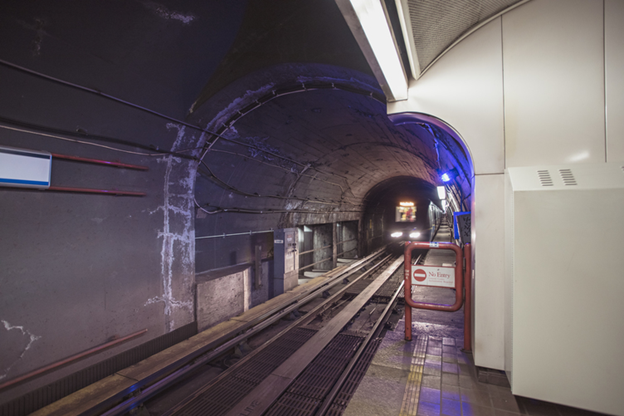
The only option to significantly add more capacity to the SkyTrain? Five-car trains that pushed the limits of what was possible with our current platforms.
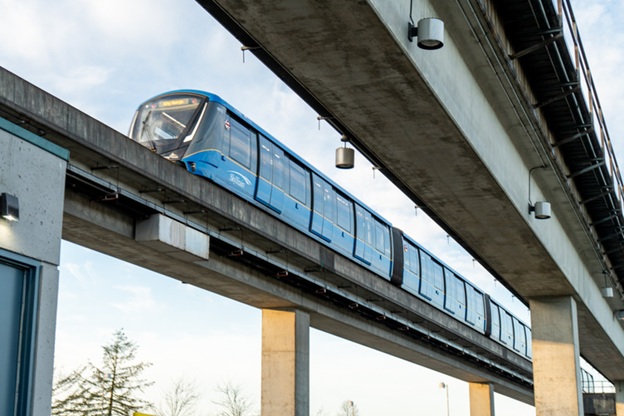
Say hello to the Mark V train! It is our longest train ever and the longest train possible.
The Mark V can accommodate 25 per cent more passengers than the next largest train, the four-car Mark III train. This means we can safely increase service without increasing the number of trains.
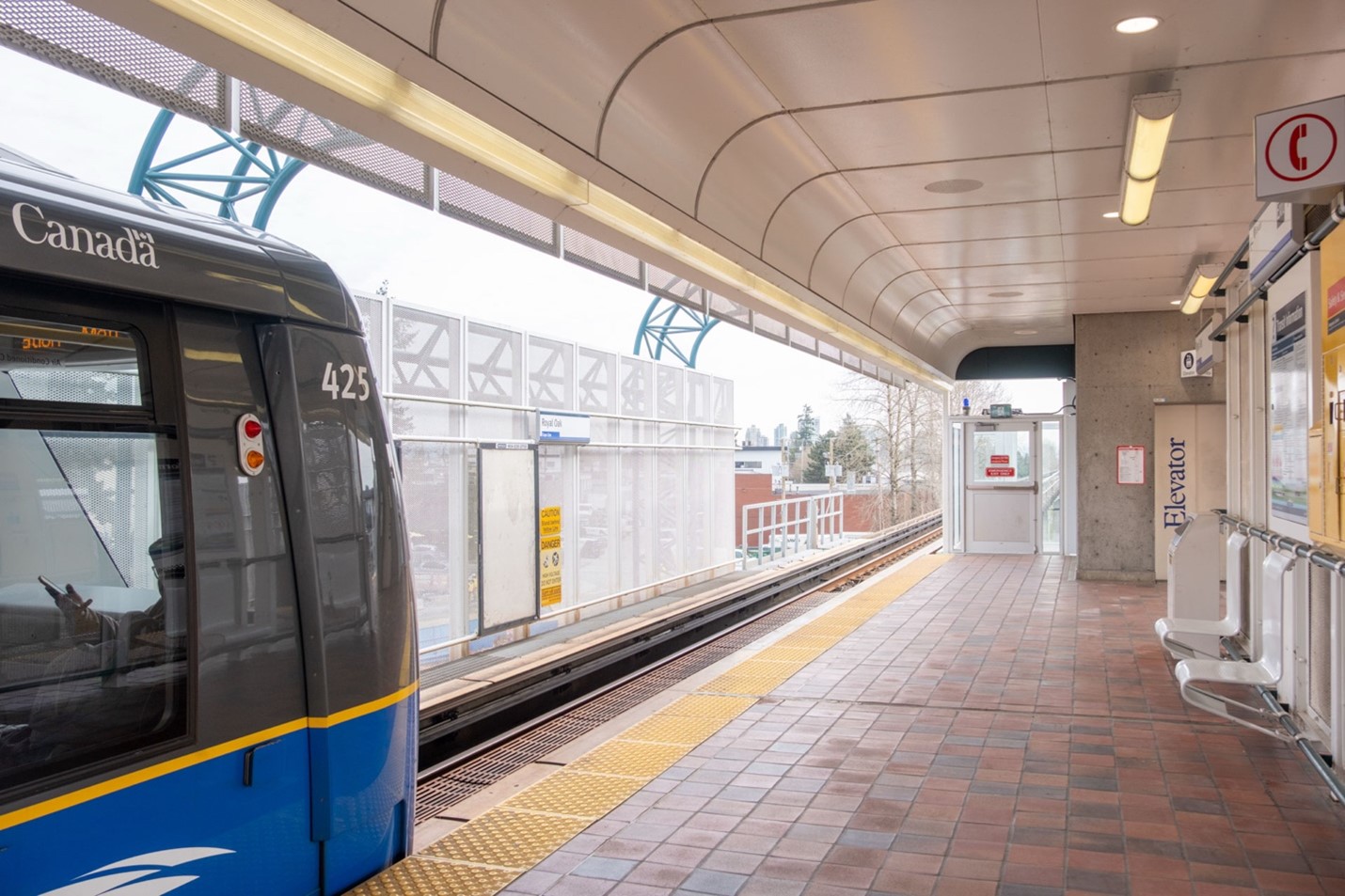
At 85 metres long, the Mark V is actually longer than our platforms, which are 80 metres long. That means the Mark V train sticks out at each end!
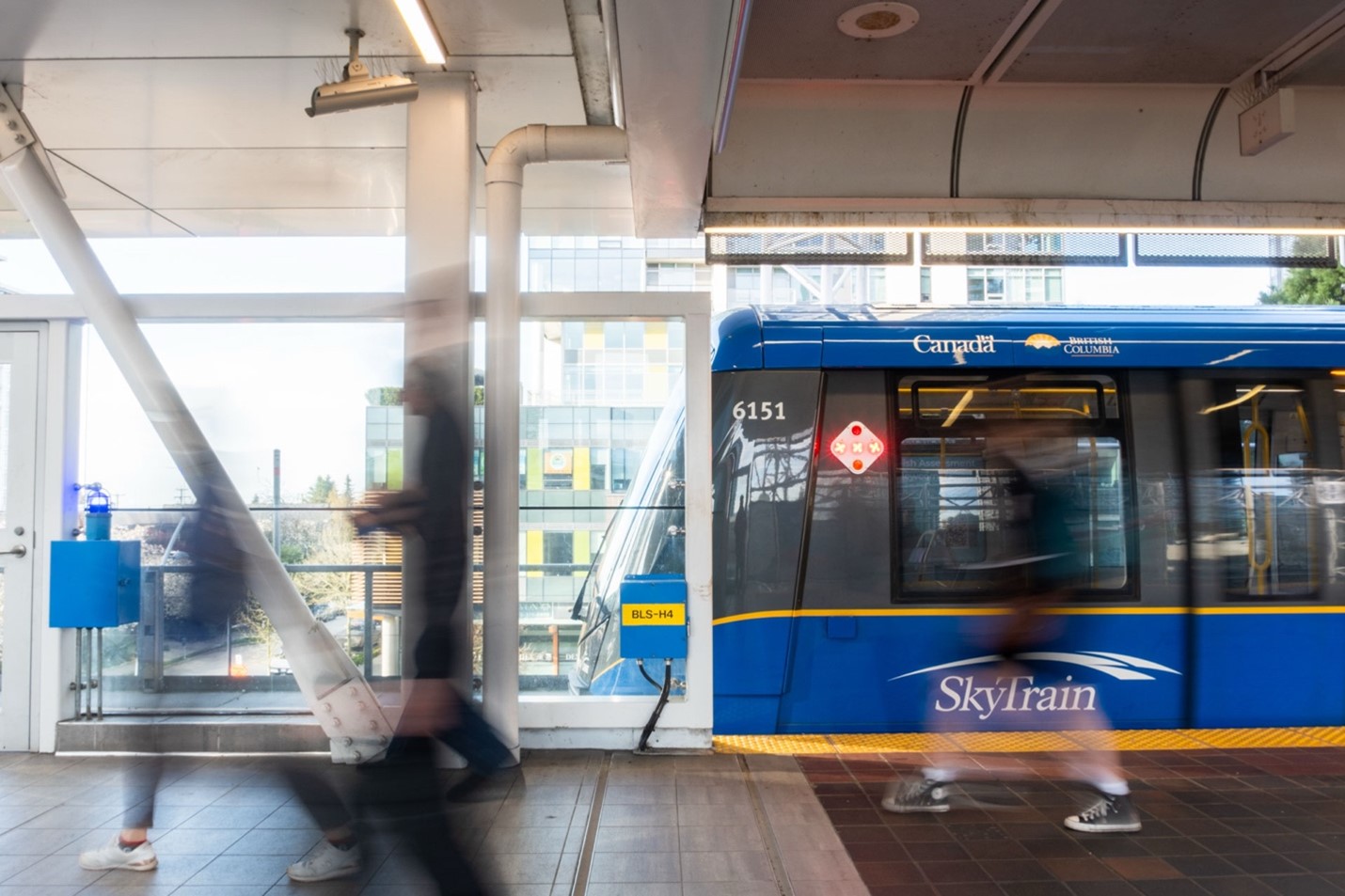
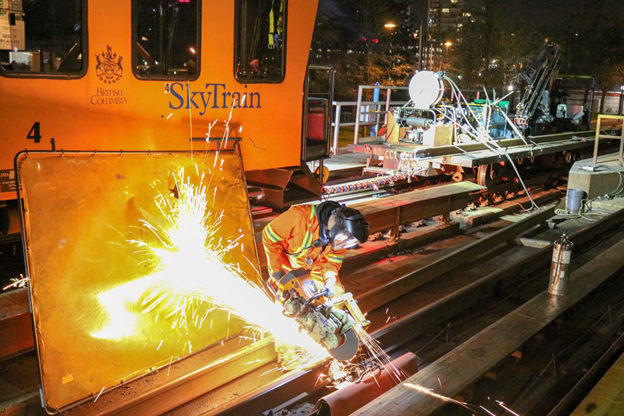
As a result, there has been modifications and work at every single station along the Expo and Millennium lines, behind the scenes as part of our Station Access and Safety Project to allow Mark V trains to operate and stop at the platforms!
Fitting the Mark V train at stations
Operating a larger train sounds simple enough but it is much more complicated in reality. Stations were built to accommodate a certain capacity of passengers and length of train.
In 2019, we conducted a study investigating each SkyTrain station to determine what kind of upgrades would be necessary to prepare each unique station to accommodate the physically longer trains and the higher capacity passenger loads.
We identified that we would need to modify the platform itself, move staff walkways and train systems further outside the stations so they wouldn’t be blocked by the longer trains.
We also needed to expand the emergency egress capacity at some stations to ensure the passenger load on a full Mark V train could exit the station safely and swiftly in the unlikely event of an emergency.
“It’s a lot like the airline industry,” explains Simon Lee, project manager for the Station Access and Safety Project.
“There are standards around how many people need to exit within a certain amount of time. You have to evacuate a plane in a specific window — and it’s the exact same thing here.”
Here’s the upgrades and modifications we had to do!
Reducing platform gaps
It may not be immediately apparent that the edges of our train platforms are not entirely straight or flush with the trains at either end. They taper off.
Trains can rattle and sway side to side as they approach the platform and enter the station. The platforms taper at the ends to provide as much clearance as possible for trains in areas where passengers aren’t boarding.
The calculus changed with the Mark V trains!
They extend nearly five metres further on either end, passengers would now have to board the end cars over a larger gap between the platform and train.
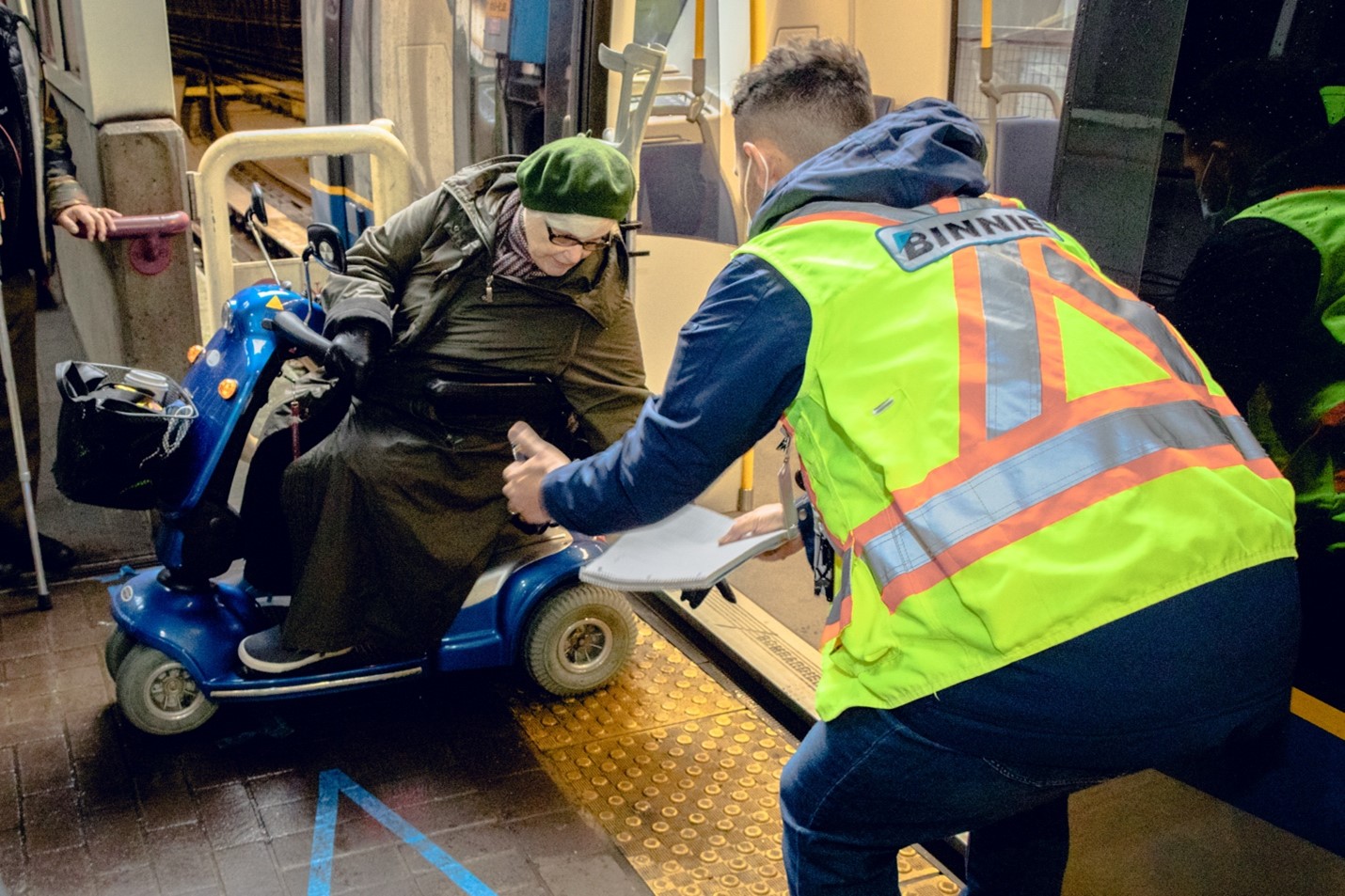
To make this safe, we applied a custom rubber-based gap filler and platform tactile strips to all four platform ends at most stations (153 ends in total!). This ensures accessibility is maintained at all doors of the train, which actually goes beyond the Americans with Disabilities Act guidelines for modifications to existing systems.
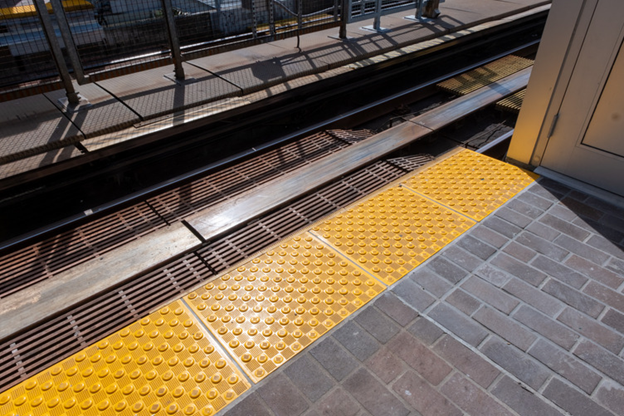
Since these were custom designed for our platforms, members of TransLink’s users advisory council on transit accessibility were kind enough to help test the gap filler in the early stages to ensure it was up to standard, tested by crossing in wheelchairs, power chairs, with guide dogs, canes, and in wet conditions.
Moving our Guideway Intrusion Monitoring System sensors
As part of SkyTrain’s many safety systems, the Guideway Intrusion Monitoring System alerts SkyTrain control if anything enters the guideway that could be a hazard to trains.
“Those guideway intrusion monitoring systems essentially shoot lasers across the track,” says Simon. “If anyone or anything goes past that point, it’s detected immediately.”
In the event something does enter the guideway, trains in the area are stopped until staff can visually check for an object and remove it as needed.
The sensors are located around the train’s stopping position, so the train itself does not set off the alarm.
With Mark Vs extending nearly five metres on each end, we had to physically move the sensors at many SkyTrain stations so the longer trains wouldn’t block them.
Moving track walkways for staff
Toward the outer ends at each station, there are walkways within the guideway that allow staff to safely cross the tracks to check for things like objects that have fallen in.
At a dozen stations, the location of the walkway would be blocked by our longer Mark V trains, meaning if a train was stopped at the station, staff would not have safe access to the guideway.
Similar to the Guideway Intrusion Monitoring System sensors, we had to build new staff walkways further toward the ends of stations to ensure safety of staff and operational reliability.
Installing “hostler” signage
At every platform, there are signs that indicate where trains should stop so passengers can safely get off and on the train.
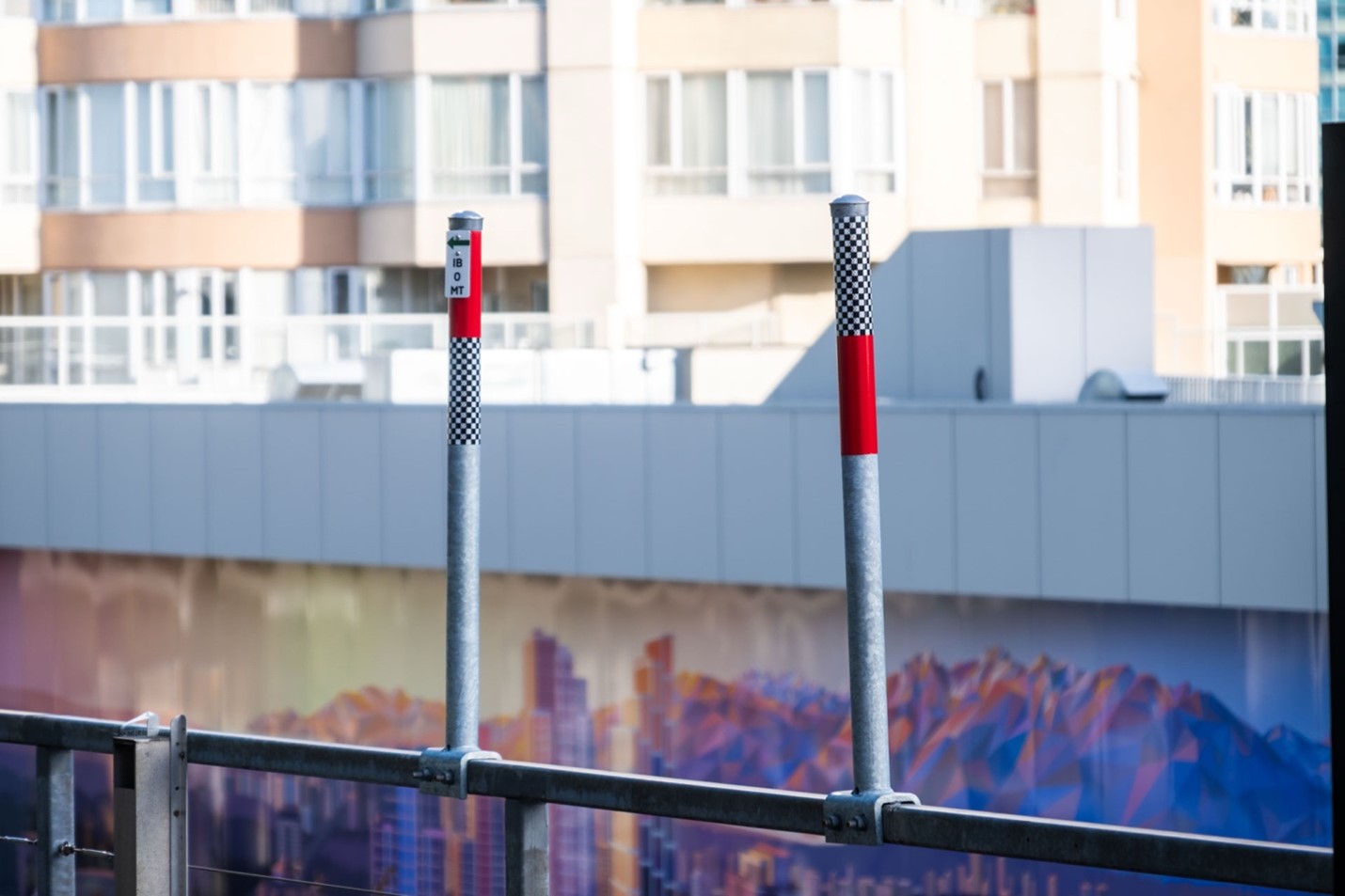
While SkyTrain runs on an Automatic Train Control system, there are times when trains have to be individually operated/driven — or what the railroad industry calls, “hostled.” Whereas before SkyTrain Attendants and hostlers had metres to stop, it’s now centimetres. Precision is key as it ensures doors open onto the platform.
Hostler signs indicate to staff precisely where to stop the train.
We had to design new signs and install them at 162 locations in total!
Emergency stair replacement
The most physically significant upgrade of them all is demolishing the narrow emergency staircases at select stations and replacing them with a new, wider staircase.
These can be easy to miss.
“These are brand‑new stairs, but they were done in the style of the original SkyTrain,” explains Simon. “We matched the steel brackets and even the colour, so it integrates seamlessly into the station. It doesn’t look like something completely Frankensteined onto the side.”
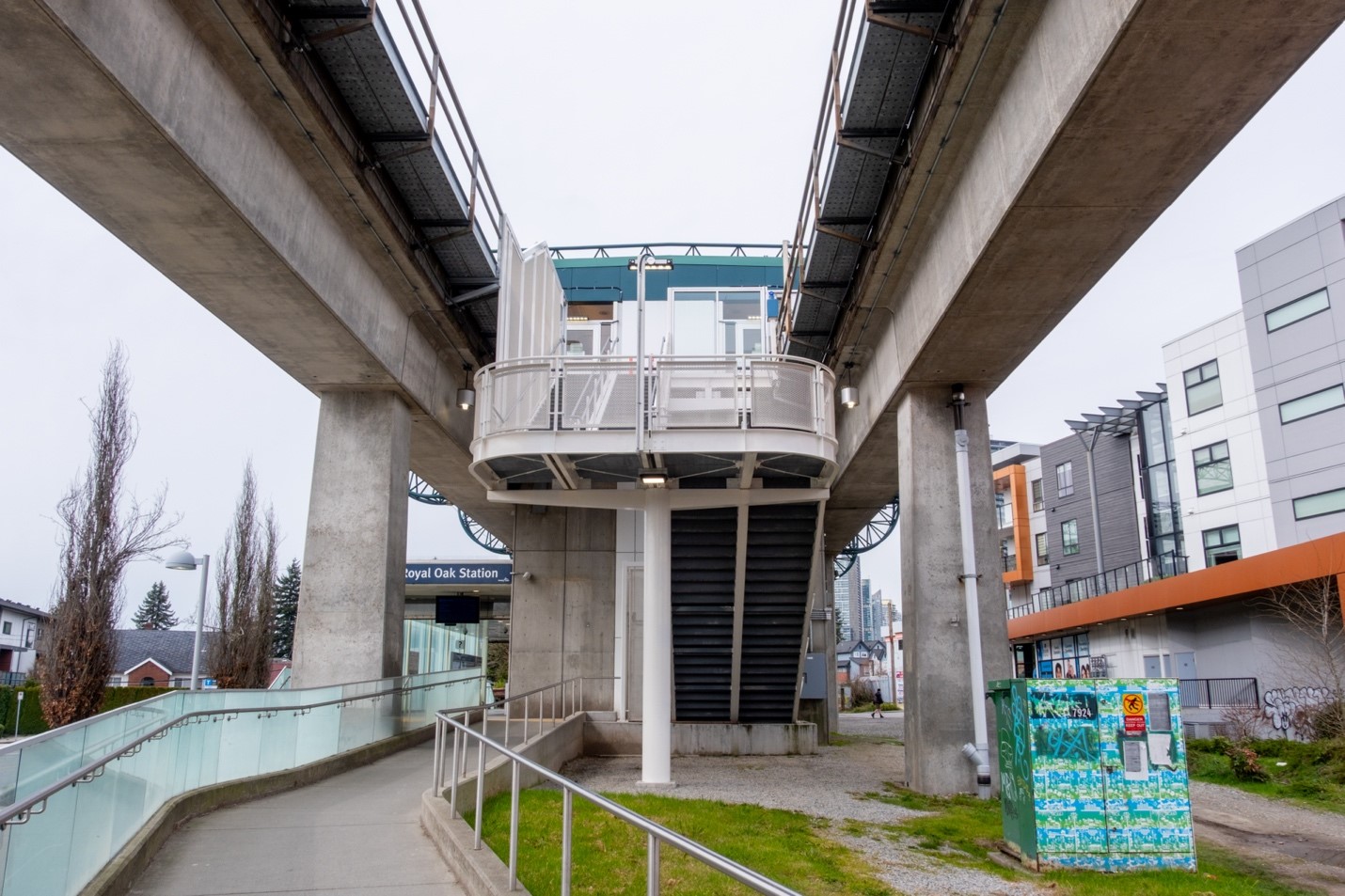
To comply with emergency safety regulations, we have to ensure that passengers can evacuate stations at a specific rate of egress.
Since our Mark V trains can hold 25 per cent more passengers than our stations originally were built to accommodate, at some stations, the emergency staircases could not accommodate a safe rate of evacuation with the increased passenger loads.
The stair replacement has been a huge undertaking.
“We can’t just remove an emergency exit and say, ‘During construction there’s no way out,’” says Simon. “We always have to put something temporary in place so the station is safe to use at all times and can stay open during construction.”
First, we have to build a temporary scaffolded staircase passengers can use during construction. Then, we have to demolish the existing steel staircase and build a new, wider one in its place.
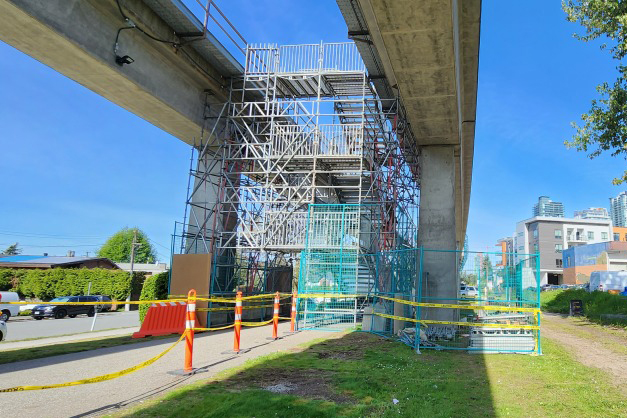
At Gateway, we even had to cut a hole in the middle of the platform for the temporary staircase because there was no other viable location on the station’s perimeter!
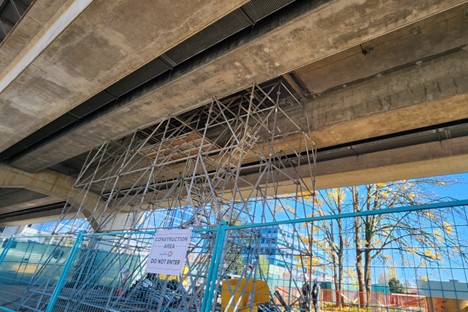
At the same time, we’re also upgrading platform end safety gates at a handful of stations.
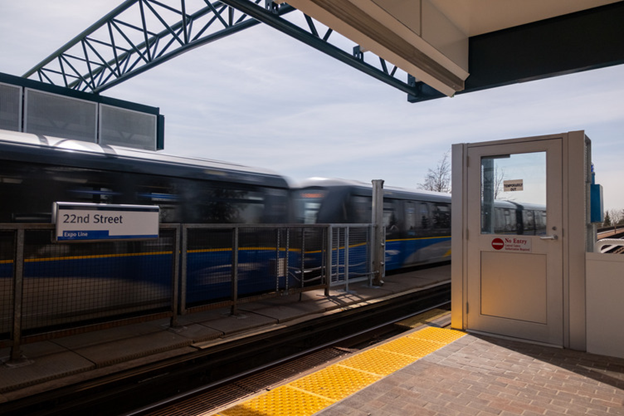
No easy task
The Station Access and Safety Project is a herculean effort behind the scenes.
“All the public really sees is a little bit of hoarding at the station. But everything remains operational, and everything remains safe to use.”
Work has taken place during the engineering and maintenance hours overnight, which are the roughly four hours overnight when trains aren’t operating and carrying passengers.
“By the time we actually get into the track, we generally have about two to two‑and‑a‑half hours of work before we have to get back out, re‑energize everything, and get it ready for trains running the next morning,” explains Simon.
At 40 years old, the SkyTrain is no longer a new system and there are a lot of maintenance and upgrade projects across the system to keep it in tip-top shape. Like you might splash on a fresh coat of paint at home, we have a multitude of projects to maintain a state of good repair.
Our Station Access and Safety Project has needed to fit within all these other projects. There’s internal permitting and also permits with the city with the work.
It’s also not a simple copy one station and paste it at the other stations. Each station is unique.
A station with side platforms is different from a centre platform. A centre platform may have just one emergency staircase, while a side platform would require two. While a station with entrances at both ends would require no emergency exit at all.
What’s next
We’re now continuing work on the Millennium Line to prepare it for Mark V. For now, the Mark V is only running on Expo Line, where the service levels require more capacity.
SASP will also enable Mark V vehicles to run on the Millennium Line in the future when the service levels require longer, higher-capacity trains.
“We’re not just building the system for today,” explains Simon. “We’re looking 20, 30, even 50 years into the future, and making sure it still works as demand continues to grow.”




My gripe is the lack of escalators at stations in both directions and the fact that elevators at numerous stations are regularly out of service. As an 87 year old who uses Oakridge 41st and Cambie and 49th and other stations on the Canada line regularly, having to use the stairs available is a daunting problem, …..when you’re my age you’ll find this out!