


Transit Security vehicles get smarter lights for safer nights
Transit Security vehicles get smarter lights for safer nights
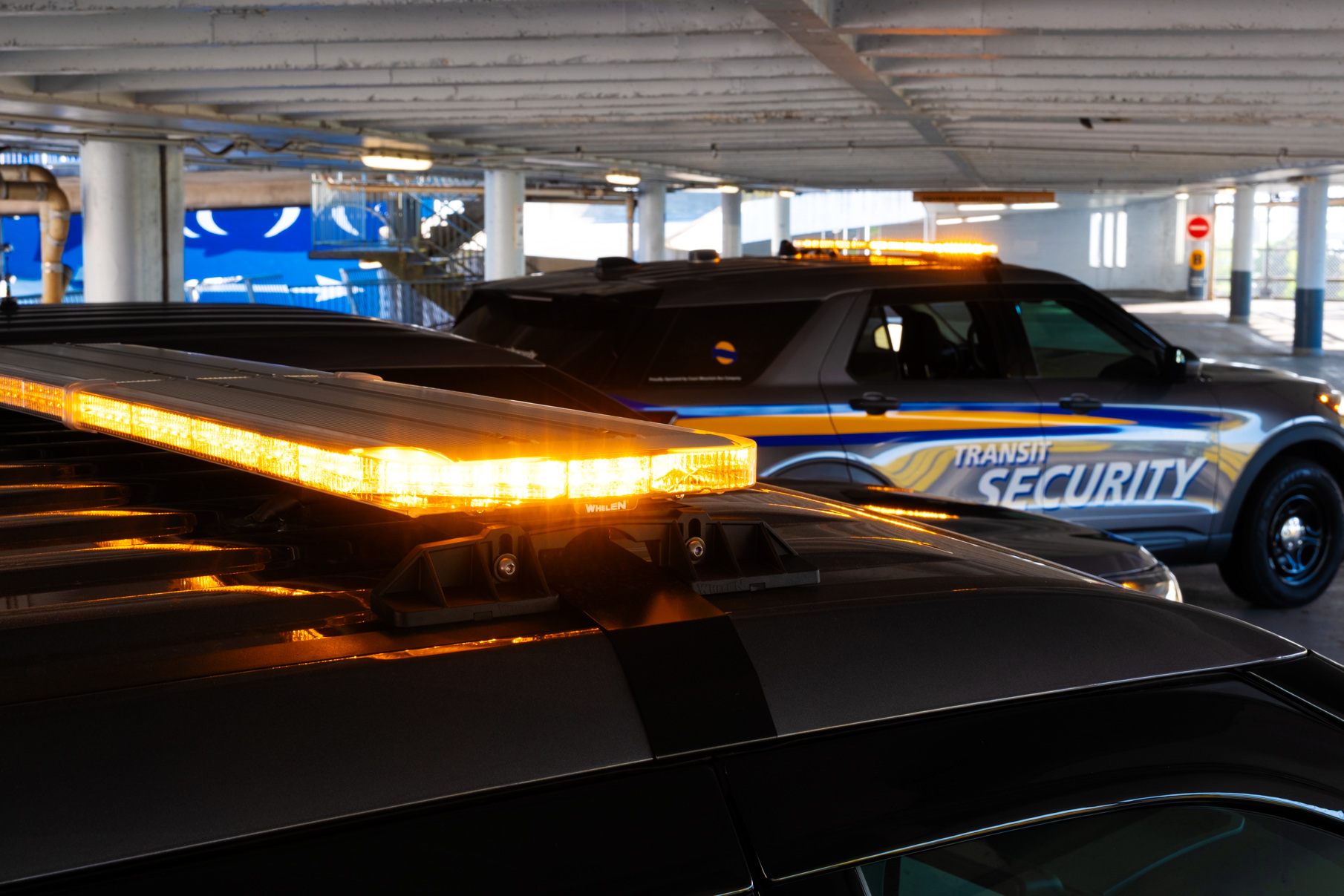
Transit Security vehicles are getting a big upgrade to make flashing emergency lights easier on the eyes at night.
How does it work?
At night, the pupils in our eyes dilate to take in more light. However, bright flashing lights – like from police, fire and ambulance vehicles – can force our pupils to quickly compress. Not only does that cause us to squint, but it can create a visually disorienting and chaotic situation.
“All that light saturation can be hard on our eyes, whether you’re a Transit Security Officer or Transit Supervisor coming up on a scene, or a passing operator, driver or pedestrian,” said Shawn Blackwell, a Physical Security Investigator who oversees the new technology and build of the of the Transit Security vehicles.
The technology allows vehicles with different lighting to synchronize light intensity and patterns when they arrive on scene. It even responds when a vehicle is put in park or drive. For example, when a patrol car is put in park or someone opens a door, the system automatically adjusts or shuts off certain lights. This gives Transit Security Officers clearer visibility of the scene around them by minimizing their own vehicle’s glare.
The system is developed by Whelen Engineering, a leading manufacturer of warning lights for emergency vehicles.
The new lighting has been installed in four Security Services patrol cars, with upgrades planned to seven more vehicles this year. Transit Police will be adding the lighting system to six Ford Rangers to start, and Maple Ridge Fire and Rescue and Delta Police have already integrated the lighting into their fleets.
View this post on Instagram
Soft light, safer scene
Industry research shows more mellow lighting patterns improve safety.
Organizations like the National Fire Protection Association recognize slower, dimmer lighting is still effective without overwhelming the human eye and have set the new standard for emergency vehicles – another reason why the lighting system is being adopted, Blackwell said.
It can improve depth of field and reduce blinding glare for oncoming traffic. It can help pedestrians and motorists better understand what’s happening and allows for a more controlled visual environment for first responders.
When vehicles can sense each other and adjust their light output accordingly, it can create a safer situation, Blackwell added.
“A calm scene is a safe scene.”