


Service increases led to fewer pass-ups last year
Service increases led to fewer pass-ups last year
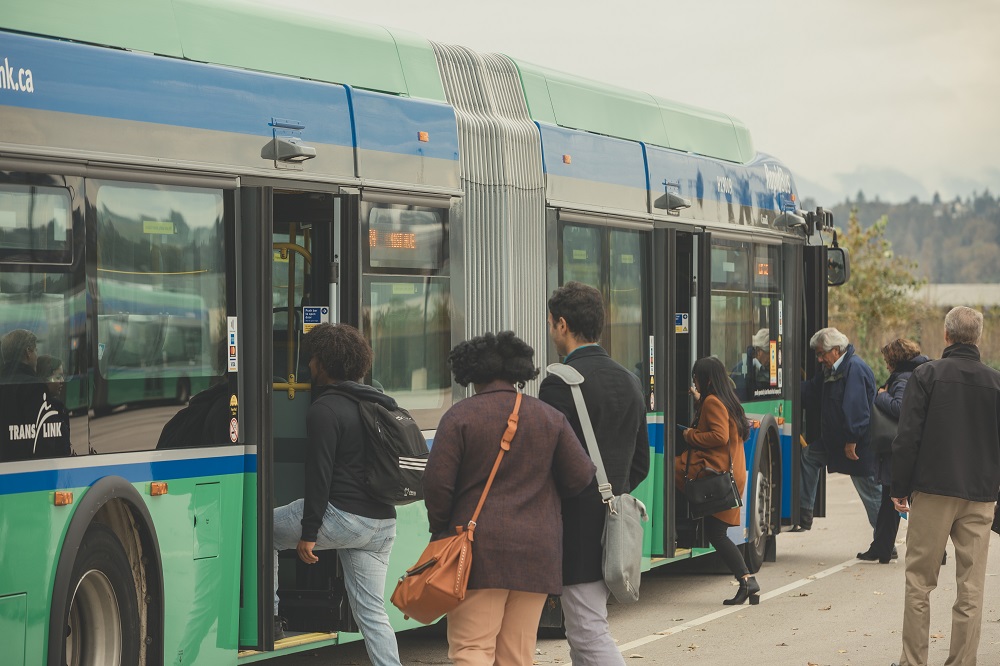
Bus customers across Metro Vancouver experienced fewer pass-ups in 2025, following service increases through TransLink’s latest Investment Plan.
Bus trips that passed-up customers dropped by more than half in 2025, according to TransLink’s newly released Transit Service Performance Review — TransLink’s annual deep dive into where and how people are using the transit system throughout Metro Vancouver.
Reducing pass-ups
A pass-up occurs whenever customers waiting at bus stops cannot board because the bus is too full. The data shows that in 2025, only 5.5 per cent of bus trips experienced overcrowding, which is down from 11.2 per cent in 2024. This means that fewer customers were passed-up by full buses last year.
A key contributing factor to the overcrowding reduction was the start of the largest increase to bus service in nearly a decade, through the 2025 Investment Plan. Throughout 2025, TransLink added more service, increased frequency, and expanded capacity across the bus network, easing pressure on some of the region’s most-used corridors.
By targeting service improvements to the most crowded bus routes, TransLink has delivered significant relief on some of the region’s busiest routes, particularly in Surrey:
- Route 321 (Surrey Central / White Rock Centre): After expanding service levels by 12 per cent last year, the share of trips experiencing pass-ups fell by more than half from 33 per cent in 2024 to 15 per cent in 2025.
- Route 335 (Surrey Central / Newton Exchange): After increasing service levels by 13 per cent, the share of trips experiencing pass-ups reduced by nearly half, from 31 per cent to 17 per cent.
- Route 393 (Surrey Central / Newton Exchange): After expanding service levels by 33 per cent last year, the share of trips experiencing pass-ups went down by more than two-thirds, from 34 per cent in 2024 to 10 per cent.
Other routes in the region that saw significant relief include:
- Route 49 (UBC / Metrotown Station): crowding went down by 26 per cent in 2025.
- Route 430 (Richmond Brighouse / Metrotown Station): crowding fell by nearly half last year.
Regional trends
- Nearly 238 million trips were taken in 2025, as regional travel patterns continued to evolve alongside changing immigration patterns.
- Ridership was affected by fewer new residents and students coming to Metro Vancouver, as these groups have historically used transit at high rates. These shifting demographics are expected to continue influencing how and where people travel across the region.
- Metro Vancouver nevertheless continues to be a North American transit leader.
- Metro Vancouver ranked third for per capita transit ridership in Canada and the US (behind only New York and Montreal) based on the most recently available data.
Strong performance for HandyDART
Our dedicated HandyDART Service Performance Review shows strong customer satisfaction and continued service growth.
- Customers rated HandyDART 8.6 out of 10, placing it among TransLink’s highest-rated services.
- More than 1.3 million trips were delivered in 2025, an increase of 7.2 per cent over 2024.
- The number of registered HandyDART customers in 2025 grew by three per cent to 32,600.
- 99.6 per cent of trips requested by customers were delivered.
- 90 per cent of trips arrived on time.
- The largest share of trips supported day programs (35 per cent), medical appointments (16 per cent), and dialysis appointments (12 per cent).
- Remaining trips supported work, education, and other purposes.
Throughout 2026, we continue increasing service on the region’s busiest routes, through the 2025 Investment Plan. Every three months, TransLink adjusts service to reduce overcrowding, improve convenience, and expand access to previously underserved areas.
For more data about transit trends in 2025, read the full Transit Service Performance Review and HandyDART Service Performance Review here.





These results clearly demonstrate the impact of targeted transit investments. Reducing pass-ups by more than half while improving service on some of the busiest routes is a significant achievement that directly benefits daily commuters across the region.
granny 1
If you want people to use Translink, tell your Bus drivers not to drive 30km/h. Maybe there would be a lot of people actually using the Public Transportation. Which wouldn’t take an hour getting to a place, that’s only 30 minutes away. Translink states that it is improving service, but it went downhill after the Bus Strike few years ago. Another $ hike.