

TransLink Podcast: Is there such a thing as a perfect bus route?
TransLink Podcast: Is there such a thing as a perfect bus route?
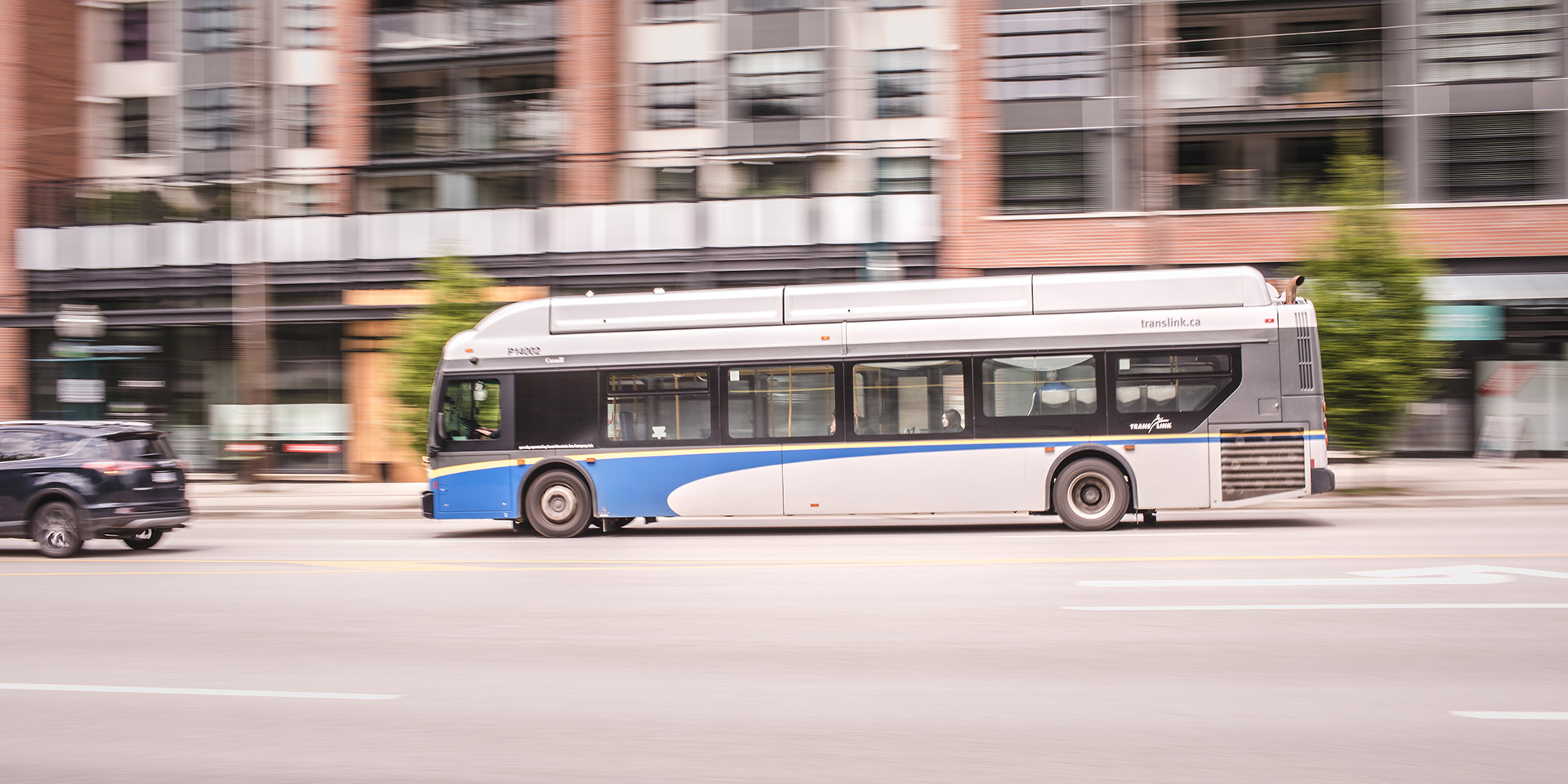
Discover how bus routes are expertly crafted. Plus, hear personal anecdotes from our guest about the significance of transit in daily life and the continuous evolution of transit services to meet changing community needs.
Come behind the scenes with us as What’s the T: the TransLink Podcast with Jawn Jang reveals the voices and stories that drive Metro Vancouver’s transit system forward. Subscribe and listen everywhere you get your podcasts, including Spotify, Apple Podcasts, and Pocket Casts!
Transcript
JAWN JANG: Hey, welcome to What’s the T: the TransLink Podcast. I’m your host, Jawn Jang. Here’s what we’re checking out on this episode.
[AUDIO EXCERPT FROM “MAGIC BUS” BY THE WHO PLAYS]: Every day I get in the queue, too much magic bus, to get on the bus that takes me to you, too much magic bus.
JAWN: How exactly are bus routes actually made? Let’s tap in to What’s the T.
VOICEOVER 1: The next station is…
[INTRODUCTION MUSIC PLAYS]
VOICEOVER 2: Welcome to What’s the T: the TransLink Podcast.
JAWN: So here’s a little something about me that you probably don’t know. But I grew up basically everywhere around the Lower Mainland, and even though I was born in South Korea, my family immigrated to Canada when I was young. And our first home here was in Port Moody. And that’s where I rode the bus for the very first time. I must have been 6 or 7, but my sister and I with our baby sitter, we took the bus to visit the old Lougheed Town Centre, and this was around 1996 or ’97. So it just it was a very different experience back then. But my family would eventually move out to Cloverdale and Surrey, where I spent the bulk of my childhood. And as I got a little bit older into my teens, my friends and I slowly began exploring more and more outside of the suburbs and, you know, just naturally wanting to visit more places like downtown Vancouver. And so the bus and specifically the 502 from Willowbrook Mall to Surrey Central, that bus was our gateway to the big city. And to explain why, you would have to just look at a map. Well, the Willowbrook mall, for those that don’t know, is in Langley, and it’s just off the corner of Fraser Highway and Langley Bypass. There’s no SkyTrain station around, at least not yet. And because we were too young to have a driver’s license or car, if my friends and I wanted to get downtown, we needed to get to the SkyTrain. And so the 502, which runs along Fraser Highway between Surrey Central to downtown Langley, that bus was our ticket to the great beyond, because once you got on the SkyTrain, it felt like the entire world was at your fingertips. Now, this little story is more than just a fun little anecdote for me. It’s a snapshot into how planners map out bus routes. Think about it. There are so many streets and roads and avenues, drives and boulevards in Metro Vancouver. Bus routes can’t possibly be served on every single street, so they need to find a balance between serving the greater community and still maintaining some level of efficiency. Bus routes can’t be too long, otherwise you’re tying up too many valuable resource is, and bus routes can be too complex. They shouldn’t be taking so many twists and turns, otherwise that trip could end up taking ages. Quite simply, bus routes just need to work and to explain that process and how they’re made and expertly crafted. We are now joined by Michelle Babiuk, senior manager of transit planning at TransLink.
MICHELLE BABIUK: So what we do is take TransLink’s long range regional strategic transportation plan. So Transport 2050, and support the organization and breaking that down into more concrete and then fundable plans and leading them through implementation. So we worked on access for everyone for our ten year plan. And then we lead development of the transit service. Portions of our investment plans, and lead those into annual plans, and through implementation. And we do that for all of our conventional transit modes. So bus SkyTrain and commuter rail, West Coast Express and passenger ferry SeaBus, as well as for our custom transit service, which handed out just a large portion.
JAWN: Needless to say, I think that’s probably one of the coolest, but probably also one of the most demanding jobs inside TransLink. Because what you do essentially, is design ways to move thousands and thousands of people across the region every day. I’m curious, like what what inspired you to want to become, like a planner for transit?
MICHELLE: Absolutely. So my undergrad degree is and then is an English literature. And as I got close to the end, I thought about what do I like doing and what do I not like doing? And I realized one of the things I do not like doing is writing. And I thought, what do I enjoy? And I thought playing SimCity, being a busybody, community meetings and my bike commute. So I was, also doing some cycling advocacy at the time. Because when you’re spending an hour biking every day, you have a lot of time to think about how your bike commute. Could be better, right? So I went back for a master’s and planning degree at UBC, and I took the bus there every day, and I thought a lot about how my bus commute could be better. Okay. So when I graduated 17 years ago, I came to TransLink and worked in the bike planning program. And then I got a job working, on designs for passenger infrastructure. So bus exchanges, and, and SkyTrain stations. And part of that work involved working, very closely with the service planning teams and with the operations teams. Because those are going to be the, the end users, of the facilities in addition to customers. And when a job came up on the service planning team, I applied for it, because I, I found it really interesting. Yeah, it’s a system. There’s, like, new things to think about every day. And I really fell in love with it.
JAWN: I, I think that’s a like, honestly a great story. And the fact that you played SimCity two is actually so relatable to me. Growing up, I’m sure like many others who were, like a 90s kid, you might have had a computer at home, but maybe no internet for a little while. That was what my childhood was like. But I had SimCity, so I played a lot of SimCity. And you know, when you think about SimCity and you, you do the reflecting. Sure. It’s about building buildings and like communities, but so much of that is and maybe people don’t realize it, but so much of it is building very efficient roadways and, you know, good transportation network. So I find that all super, super fascinating. If you go to the TransLink website as an example, when we’re talking about bus routes, my bio for the website says that my favorite route growing up was the 502. I’m a Cloverdale kid, so when you’re younger and you don’t have your driver’s license and you don’t have a car, you got to use the bus to get around. And for me to get to Guildford Mall with friends to go to the shopping center, or maybe just check out the food court or even to just get downtown. The 502 picks you up at Willowbrook Mall, goes along Fraser Highway, drops you right off at Surrey Central, and you can go wherever you want to go. Like get on that unlocks the world for you. That was my bus experience, having a route that I could depend on when I was young. What was your favorite bus route? If you maybe growing up started taking transit more and, you know, is there maybe like a, like a anecdote that you can share about something like that, or is it a bike route, perhaps?
MICHELLE: I mean, it’s a great question. And I actually grew up within walking distance of 22nd Street SkyTrain station. So we took the SkyTrain to Metrotown. Yeah, down all the places you go as a teenager fare, in Metro Vancouver. And my local bus route was the 128. Okay. But I never took out my parents, made me walk to school.
JAWN: Fair enough. Yeah.
MICHELLE: But it does make me think about something you think about more as you spend more time in the planning profession. Like I joke about about playing SimCity when you’re a child. And there it’s a very technical exercise. And you have a lot of, maybe a dictatorship role for the system. And I think the longer you’re in practice, the more you think about the people that are using the system and the importance like both to communities and individuals. So I didn’t use the 128 growing up. That much. But I saw as my parents aged and, my dad lost a lot of his mobility, and handed it wasn’t an appropriate solution for him. Him and my mom started using the transit system quite a bit more than they had had done during their working lives, and it was really transformative to watch, like, what a change that that made for them and their freedom and their independence.
JAWN: Well, I think that’s such a yeah, a very succinct point is that, you know, busses, SkyTrain, West Coast Express, SeaBus and especially handed out these services, put us all on like equal footing in a lot of ways, because you can be a student, you can be an elderly, you know, you could be a senior, you can be someone who’s trying to get to work at a professional corporate job. You could be on your way to a medical appointment no matter what. It’s supposed to get you from point A to point B, and so, thank you for sharing that because I think this is true, and it’s a real life experience for so many families across, across Metro Vancouver. So I’m glad we were able to highlight that point.
MICHELLE: And I don’t drive.
JAWN: Okay.
MICHELLE: So I do take the bus every single week.
JAWN: Oh, interesting. Okay. Fair enough. And I think that’s such a great point to bring up as well, because in Metro Vancouver, there’s lots of people who decide like, I just don’t need the stress of having to pay, the car and the auto insurance and parking. I’m just going to depend on public transit to get around. So when it comes to this about designing bus routes, what makes a perfect bus route? Is there such a thing as a perfect bus route and does TransLink have a perfect bus route?
MICHELLE: Yeah, that’s a great question. Thanks for asking. I think that there can be the best bus route for a community. So when you’re thinking about designing a bus route, there are certain principles, but I think the most important one both when you’re looking at an individual route on the network that it sits within, is what are your community’s priorities and objectives. So how important is it to, you know, provide high mobility to people in your community to move people quickly, to provide high quality service? To key destinations, versus providing like a basic level of access, to a larger number of people to have objective lives around, serving certain sub populations for. So, for example, is ensuring that seniors can get around your community or people accessing certain destinations, like critical medical appointments. What are all these priorities for you? And understanding your priorities is going to help shape how you design a route and the network. And that being said, like all things being equal, typically this is disappointing. I think, the best bus routes are usually the most boring looking routes because, I mean, think about it, you’re here and you want to go here, and most people don’t want to go on a scenic tour of the whole city fair. They want to go from A to B as quickly and directly as possible.
JAWN: I think that makes a lot of sense. Like beautiful is boring. This is the moral of the story here, but it’s absolutely true because, you know, if you’re on a tour bus, of course you want to go and see everything. You want to make sure you’re hold these jam packed off all the sightseeing. But when you’re on a commuter bus, you know, a typical bus, you just want to get there as fast as you can. You don’t want there to be any delays. You want to make sure it’s as efficient as possible. Our system is modal, so it kind of feeds into certain destinations. To your point, I would assume those are like big transit hubs or SkyTrain stations. Right. So how much of that is kind of fun for you? Because you have the challenge of trying to connect busses into SkyTrain, into West Coast Express, into SeaBus, and making sure everyone has equitable access to everything.
MICHELLE: Yeah. And I think we, we and other teams at TransLink are constantly looking at the network and making adjustments because something else is communities are changing. New neighborhoods are growing up. Certain destinations might become less important over time as well as more important. And even if the built environment like that fabric of your city doesn’t change at all. And no one moves in or out, the people living in that community are still going to age like time goes on for for all of us. So there is no community that’s ever static. So the transit network needs to keep adjusting to meet people’s changing needs.
JAWN: Would you say that things like our quarterly service changes, the seasonal service changes? We do this recognizing that as the calendar rolls on, all of a sudden transit patterns have to change. In the summer, people tend to go away. School isn’t in session for most people, so we sort of adjust. I’m assuming. Is there any other explanation as to why we do those quarterly changes?
MICHELLE: Yeah. So I think people see the quarterly changes. I know on Translink’s website, that they navigate to or they see them on the ground in their communities. And in some ways, those changes are nimble. They’re responding to things we’re seeing out on the system, day to day. But a lot of that is actually planned far in advance. And work is ongoing and consultation is ongoing. And the quarterly plan, when you see it on the ground, is just the last step in that process. So there are two things you typically see in a quarterly plan. So one is permanent service changes. So those could be expansion projects that are detailed and funded in our investment plans. So those investment plans, are translated to annual plans and then broken into quarterly plans. A second piece might be reallocation. So working with our in our existing funding envelope, to move service to where customers need it, the most. And the third thing you’re speaking to is seasonal changes. So things that happen on a temporary basis every year. So for example, more service home parks and beaches and outdoor destinations in the summer. And in some cases more service at other times of the year, too. For example, post-secondary institutions that are not as busy in the summer and busier in the fall.
JAWN: You’re listening to What’s the T: the TransLink Podcast, and we’ll be right back.
Welcome back to What’s the T: the TransLink Podcast and conversation with Michelle Babiuk, senior manager of Transit Planning at TransLink. And since we’re talking about how bus routes are made, I should mention that creating new bus routes can happen as a result of building efficiencies. As an example, as part of our bus stop balancing program, our planners at TransLink were able to identify opportunities to save resources and money. We then pooled all of that together and created a brand new route, route 80, in spring of 2023. Michelle, I have to imagine that when things like this happen, it’s almost like finding free money because everyone wins.
MICHELLE: I mean, it was exciting for us because we were working in very constrained circumstances coming out of Covid. You constrained funding envelope, constrained resources. And our bus stop balancing team was doing some work to, you know, come to the right number and spacing of busses on some of the other routes in the city of Vancouver. Over time, stops had grown very close together, which was making trip times slow for customers taking the service, so inconvenient for them and also very resource intensive to run the service because trip times were getting longer. And longer. So you’re using resources every minute that you’re on the road. So we were able to take those savings, which sounds like they might be small, just removing some stops on the route. But they were so substantial. We were able to reinvest them in launching, the route 80, which is a route serving the River District in southeast Vancouver. Quite, you know, medium to high density, primarily residential community, and.
JAWN: Then a community that didn’t exist that long ago. And so now it’s quite new. And we had to adjust to that. Right?
MICHELLE: Yeah. That’s right. So this service allows people, in the River district to travel, to a number of district nations along Marine Drive also connect to north south bus services. So feed into a rail network there and then also connect people to the Canada Line. And it was exciting. I was able to be there for the first trip.
JAWN: Okay.
MICHELLE: The inaugural, inaugural route with, some of my colleagues from the, my planning team and the engineering division and, from City of Vancouver, and I caught the first number nine of the day to the Canada Line, to catch that early morning service. And, we saw both, some other colleagues want to check out the route. But also, people are actually using the route for transportation and had clearly even. Oh, waiting for that, like they really needed that service in their lives because they were right there at 6 a.m. to board the first trip.
JAWN: I love it. I mean, I think that’s the truth. We have to peel the curtain back a little bit. Is that when we have, things to announce, like the brand new route, it’s exciting to us because it’s like the fruits of all the labor that you have to put into this, to try and track down the resources, try and plan out which route it’s going to be feeding into. To your point about going north south on other bus routes that have already been pre-established, like there’s a lot of work that goes into making sure that this is happening. Of course, you go on to celebrate. Of course, it’s exciting. So I think it’s good that people know that we’re all humans. And this is kind of like, not that we’re like drinking, but like a champagne bottle popping moment right where you and your team get to say, look, we made this. Like, this is something that we did, and look at everyone that’s enjoying it. Now.
MICHELLE: I mean, that was really exciting. And the other thing is, like, I think about the the system as a regional network and knowing that the system is always changing, the city is always changing and we’re always changing. Like the At isn’t part of my commute today. But maybe I will live somewhere different in the future. Maybe I will make a friend that lives somewhere different. Or, you know, take up a new hobby that involves traveling somewhere different in the region. So I think about, yeah, the service right around me that I’m using today, but also all the opportunity that services in different places open up for us to travel.
JAWN: Someone’s going to hear the things you have to say and feel inspired the same way that, when you were, you know, younger and all those experiences that you had shared, you were inspired to realize that maybe you don’t love writing, but you do love writing. Oh, that’s so cheesy. I was trying to think of a way to make this work, but, you know, it inspired you to make this career choice. And now here you are, the what are some words of advice you would have for someone who’s seriously interested and invested and wants to be a part of the solution, and helping this transit system grow and stay nimble in the future. What are some of the advices that you’d have for them?
MICHELLE: Right, well, I think for, for people in general, there are so many ways to be involved, by sending us feedback, by participating in consultations, by getting involved in different ways. And your community is like through your residents association, through your, citizens advisory, councils, for your local government, this is one piece of democracy. And, it’s not just people sitting in office making it happen like we all need to engage in our community in that way. For people thinking about having a profession, in transit or transportation, one people, one piece of advice I would give is, be open minded about what you might be able to do and what might be interesting to you. So I, I think transit transportation planning is thought of as one of the more technical or quantitative fields, in the planning profession. And, I think that can be true. But also it’s really about people with working with stakeholders, with working with your colleagues, working with elected officials. So it’s quite broad. And then there are so many other aspects of, of the profession as well. So having an English degree, I never imagined that, you know, a year out of school, I would be a project manager for designing an infrastructure project. And I was absolutely able to do that, and also wanted to do it like, it turned out to be about working with people about urban design as well as about transportation and, seeing like lots of women that are very successful in our profession. But I think sometimes the stereotype of it being very quantitative can sound it, make it sound less interesting to other people, or less about values, or less about the community. And it’s not, you know, it’s equal to other aspects of planning. And it’s really interesting and you never know what you might be interested in. And I’ve done so many different things in my career, and I never would have thought they would have been the right thing for me. But they were all great experiences.
JAWN: Michelle, thank you so much for giving us some time here today. And if, I don’t know if there’s if there’s one thing I’ve learned from this, it’s that the best, most beautiful bus routes are boring. So let that be the key component to take away and realize why that is. Michelle, thanks so much for this.
MICHELLE: Thank you.
JAWN: Boring is beautiful. And yet the truth is transit planning is anything but boring. It’s almost organic in nature, the way planners receive and interpret data and then make adjustments when and where necessary. As communities grow and change transit service needs to be flexible and planners have to adapt. It’s like a silent and invisible dance between causation and effect. And when you consider just how many bus routes or transit hubs there are across Metro Vancouver, it’s actually incredible to think about. Boring may be beautiful, but so is this intricate give and take of logistics and data. My thanks to Michelle Babiuk and the entire transit planning team. They do such great and important work behind the scenes, making sure our transit system runs as smoothly as possible.
My thanks to producers Alan and Sydney for always mapping out this podcast expertly and efficiently. And of course, my thanks to you for listening and subscribing. I’ve been your host, Jawn Jang. And until next time, have a safe trip!