

How you can support transit riders who are neurodivergent
How you can support transit riders who are neurodivergent
For many people, riding transit might be the easiest and most routine part of their day.
But for riders who are neurodivergent or living with autism, its sensory demands can be overwhelming.
The crowds, the noises, and the potential for unexpected things to happen.
So, riding transit can be a demanding activity.
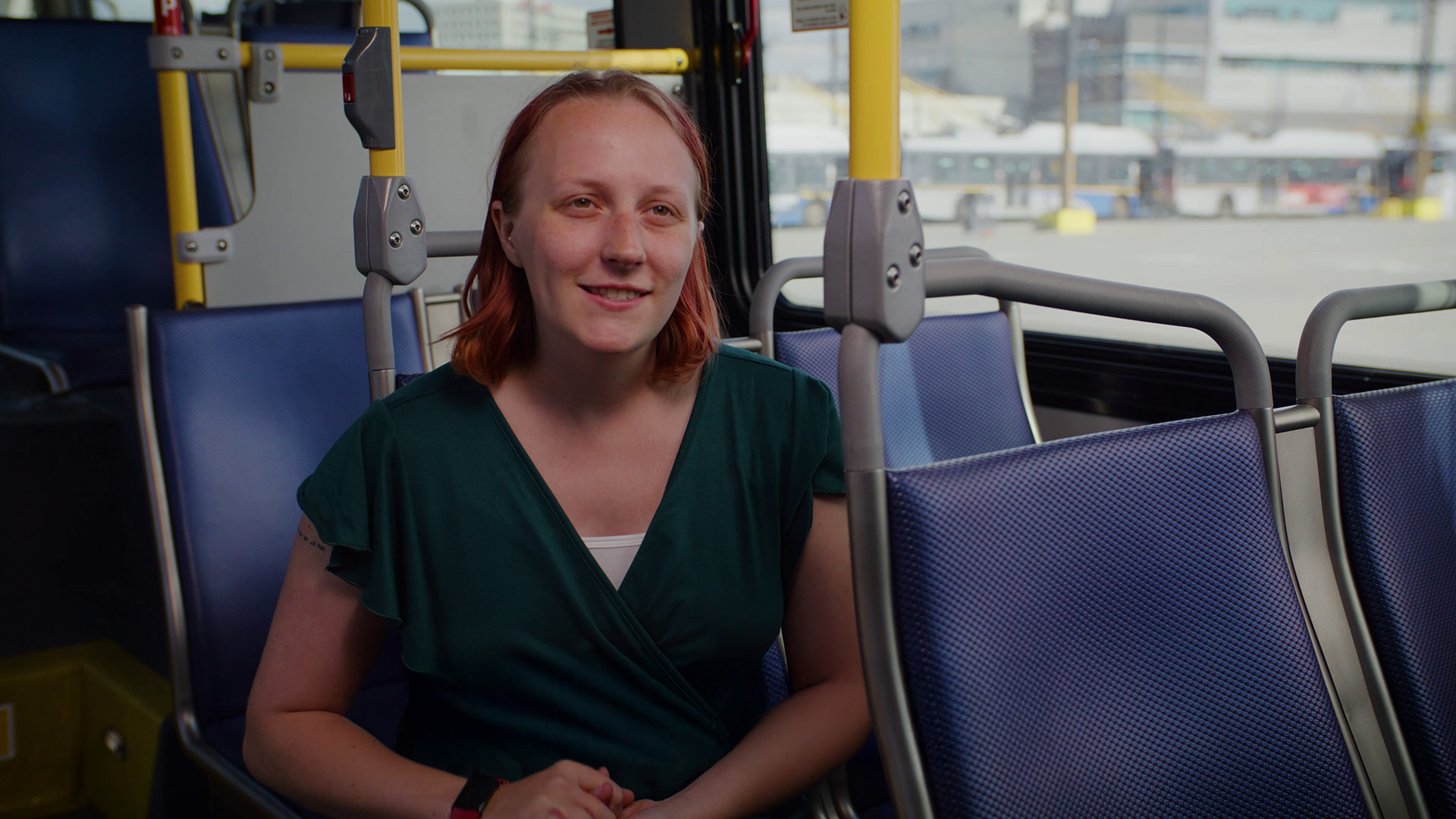
Kayla Tellier, a self-advocate, explains that people with autism experience different sensory processing and rely on routine and sameness, which affects how they use transit.
They may have a preferred seat or area of the bus to sit in because that’s their comfort zone.
“They may have gone through transit training and always sat in that particular spot when accompanied by their worker,” explains Kayla.
“Now, they are alone, and the spot is occupied. They feel the need to sit there because it was part of their routine during training and has become familiar to them.”
Missed stops can make them anxious and upset.
Many also have invisible disabilities, according to Kayla, noting muscle and joint issues are “very common” among people living with autism.
Kayla herself has joint issues that prevent her from standing for long periods of time.
“I can walk across the flat floor just fine, so it’s not evident that I might need a seat,” she says.
That has created some challenging situations for Kayla when there’s no seats on board or she’s seated in a priority seat near the front of the bus.
“The minute somebody [else] that’s on the bus [who] also might need that seat, I’m one of the first people they might expect to get up,” Kayla explains. “Because I’m young, I look healthy, [and] I look capable.”
“I’ve had a lot of people get really mad at me for not getting out of the seat.”
To avoid conflict, Kayla would try to find another seat on the bus or a place to stand where there’s extra support. But if she can’t, Kayla will disembark the bus or train and wait for the next one.
“It’s just easier sometimes to just get off and wait for the next bus or train,” she says.
This how Kayla adapts. But for others, disruptions to their routine can cause distress, which leads to self-stimulating behaviour — or what’s commonly referred to as stimming.
Stimming is a common behaviour among people living with autism, often occurring due to stress, anxiety, excitement, or other strong emotions.
Kayla explains it can come out in different ways and is a way to regulate everything going on in one’s brain.
It encompasses a variety of repetitive actions, such as rocking back and forth, or sounds, that can help the person feel more comfortable.
“Some people hum, some people will grunt, some people will growl, and some people will rock, or they’ll rub their hands, or maybe they’ll be patting their lap,” says Kayla.
Though these behaviours might seem unusual to some, they serve as essential coping mechanisms for people with autism, helping them to manage overwhelming feelings and maintain a sense of calm.
Kayla explains it’s akin to car drivers opening a window for fresh air or turning down the music to see better.“It’s like if you’re driving and you’re tired, you might roll down the window so that the cool air comes in to stimulate you and keep you awake,” she says.
It is important for everyone to show empathy and understanding when riding transit as there are people with diverse abilities.
Showing empathy and understanding
To that end, recognizing the diverse abilities of our riders, Coast Mountain Bus Company has updated its training program to include a video on how operators can best support customers who are living with autism and related neurodiversities.
Coast Mountain is the TransLink operating company responsible for delivering much of Metro Vancouver’s transit bus service.
“Every day, we serve a variety of transit users across our system and each one of them has a unique story,” says Mike McDaniel, president and general manager of Coast Mountain Bus Company.
The training video provides current and new operators with facts, figures, and insights about transit customers who are part of the community. It recreates some common bus-related scenarios, offering operators valuable tips and techniques for supporting customers.
How to support neurodivergent riders well is something Pall Beesla knows well.
Pall, who stars in the training video as the operator, drove for eight years before becoming an instructor where he leverages his experience to train new operators. He’s also a parent of a child living with autism.
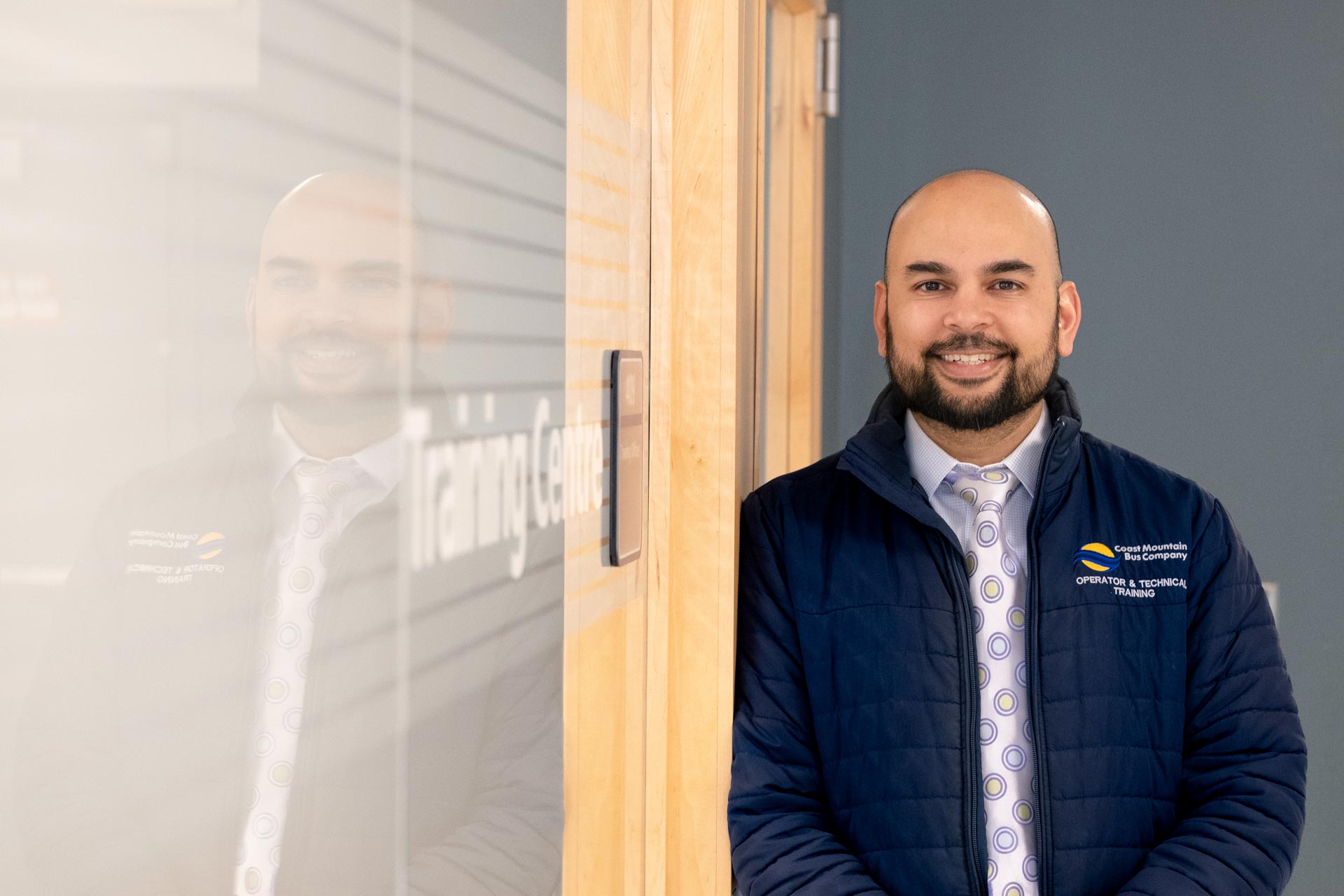
Pall, along with a fellow instructor, were tasked by Russell Nikiforuk, Senior Manager, Training and Development at Coast Mountain Bus Company, to create the content for the training video.
We created the video in partnership with the Pacific Autism Family Network, a network of support for individuals and families with autism and related neurodiversities.
The video, which is part of Coast Mountain’s training for new and existing operators, covers:
- Awareness and insights about the neurodivergent community;
- Common traits that neurodivergent customers may exhibit;
- Possible scenarios and strategies for successful interactions; and
- Perspectives from neurodivergent riders about their transit experiences.
“For many neurodivergent riders, transit is both a passion and a lifeline to being part of our community,” says Loring Phinney, chief executive officer of the Pacific Autism Family Network.
“This partnership is an important step toward ensuring bus operators have the background information and support strategies they need to help neurodivergent riders across Metro Vancouver get where they need to go safely and happily.”
Pall says the video is making a difference amongst operators as it’s helping them identify stimming and providing them with practical tips and tricks.
It has also helped operators connect the dots on past experiences with riders, allowing them to be more empathetic in the future, he adds.
People living with autism may have a strong interest in preferred topics such as transit, reduced eye contact, and challenges with emotional processing when they are upset.
Asked how customers can better help people living with autism on transit, Pall’s advice is to use simple short statements and ask closed-ended questions.
Open-ended questions such as, “How can I help you?” can add to an already stressful situation.
“That question itself is very overwhelming because they don’t know what they need in that moment,” explains Pall. “If you give them closed options like two options, ‘Do you want me to ask the driver, or do you want me to call someone for help?’
“Then it’s quick. It’s easier for them to make a decision.”
Mike adds, “Our goal with this partnership is to ensure the neurodivergent community is met with empathy, compassion, and understanding while taking transit in our region.”
To further support our riders, we also provide travel training to riders. Over the years, we’ve delivered workshops for various groups, including the Canucks Autism Network, S.U.C.C.E.S.S., newcomers, and different senior centres.
“Transportation is a small part of each person’s day, but it’s the part of the day that makes everything else possible,” says Chris Chan, who is TransLink’s manager of travel training.
He delivers many of the workshops. They aim to instil confidence in participants and provide them the information they need to ride transit, so that they can travel independently.