


How elevators are replaced, explained
How elevators are replaced, explained
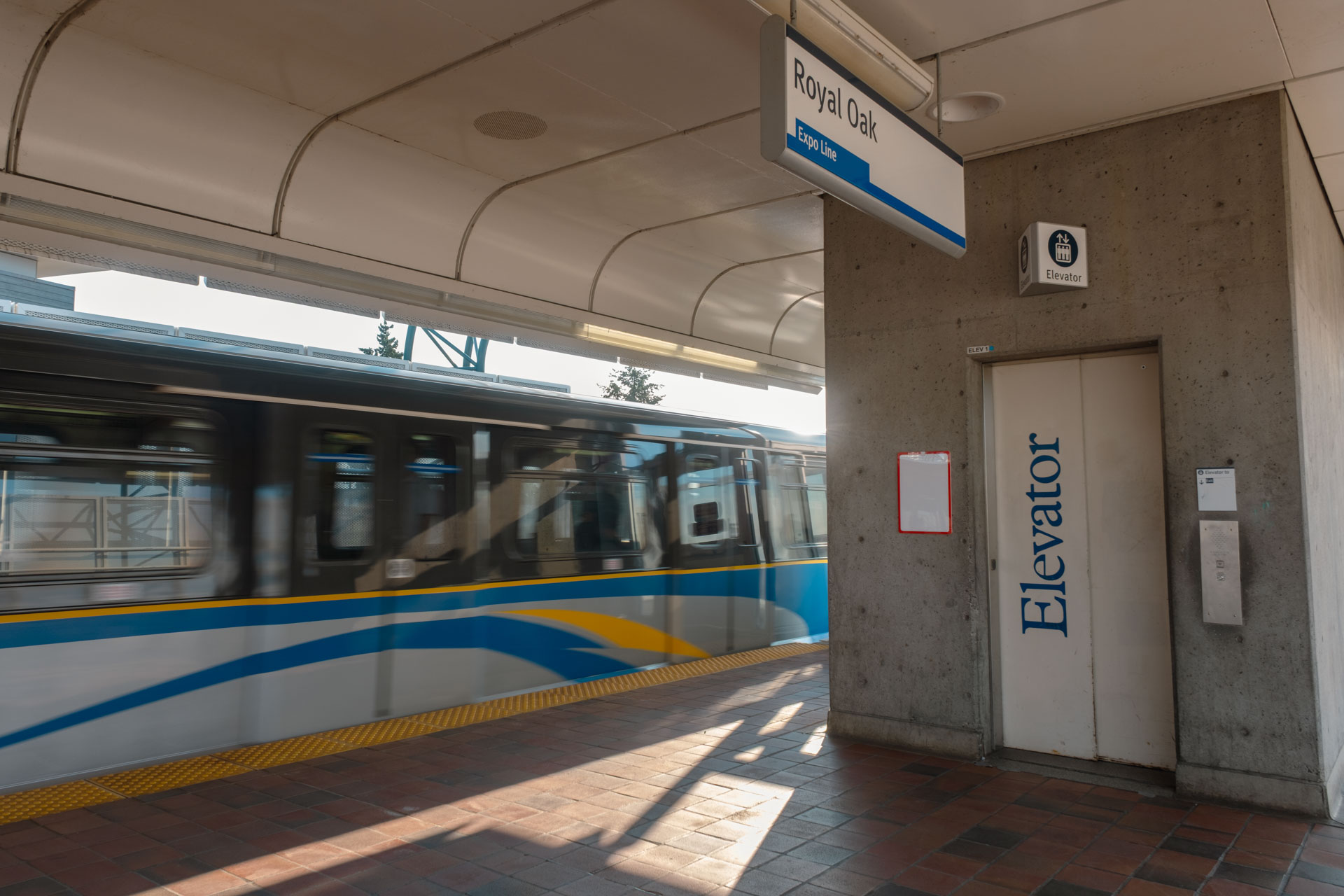
Did you know some of the SkyTrain’s original elevators along the Expo Line have been moving customers up and down 20 hours a day, 365 days a year for nearly four decades — that’s enough to make anyone tired!
Imagine using the same phone for 40 years, you’d say it’s time for a new one that runs smoother and has more room.
That’s what we are doing through our Expo Line Elevator Replacement Program.
We’re bringing you new elevators that have 20 per cent more room and require less downtime for maintenance.
But as the saying goes: no pain, no gain. It rings particularly true for elevator replacement.
We know elevators are an important amenity for so many of our customers — not just those who use wheelchairs or have mobility challenges. Think families with strollers and people travelling with luggage or a bike.
But in order a replace an elevator, we need to close it for about four months.
The herculean task with replacing elevators
This may sound and feel like a long time, but we’re working expeditiously. At stations where there are two elevators, we’ll only replace one at a time.
Imagine trying to build a coffee table inside a closet instead of being able to lay out all the pieces and building it in the living room.
That’s essentially what’s happening with an elevator replacement.
We’re replacing an elevator within a small footprint inside station as we need to minimize the impacts on SkyTrain service and passenger flow. Each task also needs be carefully planned and sequenced, which adds time but ensures all around safety.
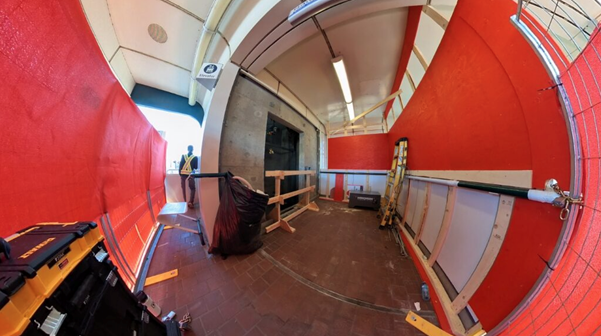
Take a peek behind the hoarding at the Nanaimo Station replacement for an idea of how little space we have to work with. It truly is the size of a closet — albeit a walk-in closet.
During major construction projects, completing work is much easier as large areas are closed off to customers. As a result, in some cases we can bring in a nearly completed unit for installation.
That’s what we did when we installed an escalator to provide access to the new Expo Line platform at Commercial–Broadway Station.
But replacing the escalators at Granville Station was a whole different situation. It’s the deepest SkyTrain station in the system.
We had to remove the escalator piece-by-piece and build the new one in its place —also piece-by-piece — on site because of the confined space underground. Replacing an elevator is the same meticulous and methodical process. There are no shortcuts!
The secret behind how elevators are replaced
It’s a six-step process that includes decommissioning and removal of the elevator, hoistway preparation, hydraulic jack and pump installation, car and door assembly, electrical and controls, and testing and certification.
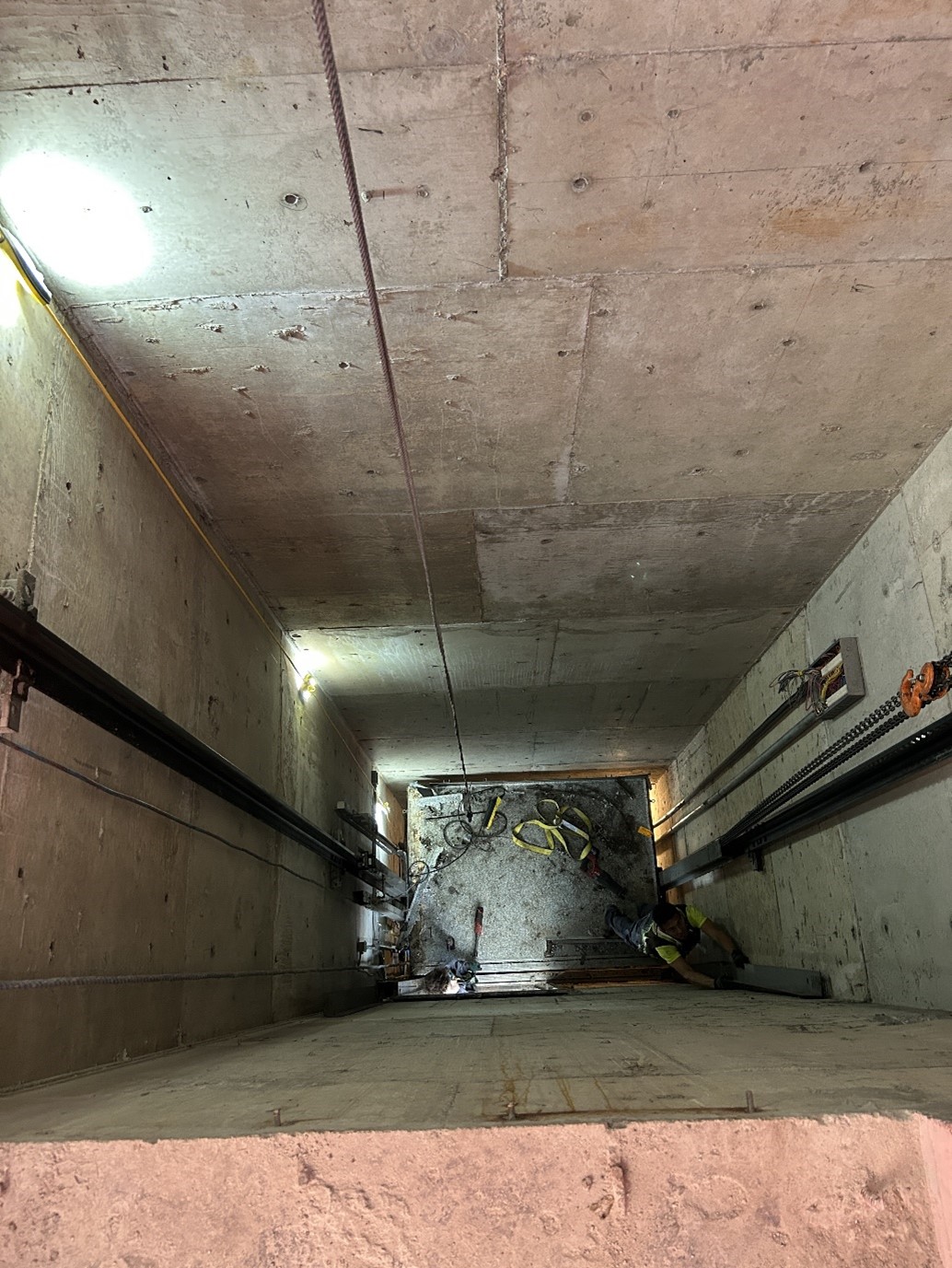
The existing elevator must first be carefully deconstructed piece by piece from the elevator shaft, which is the vertical space located between floors that house the elevator car and the mechanical components needed for its movement.
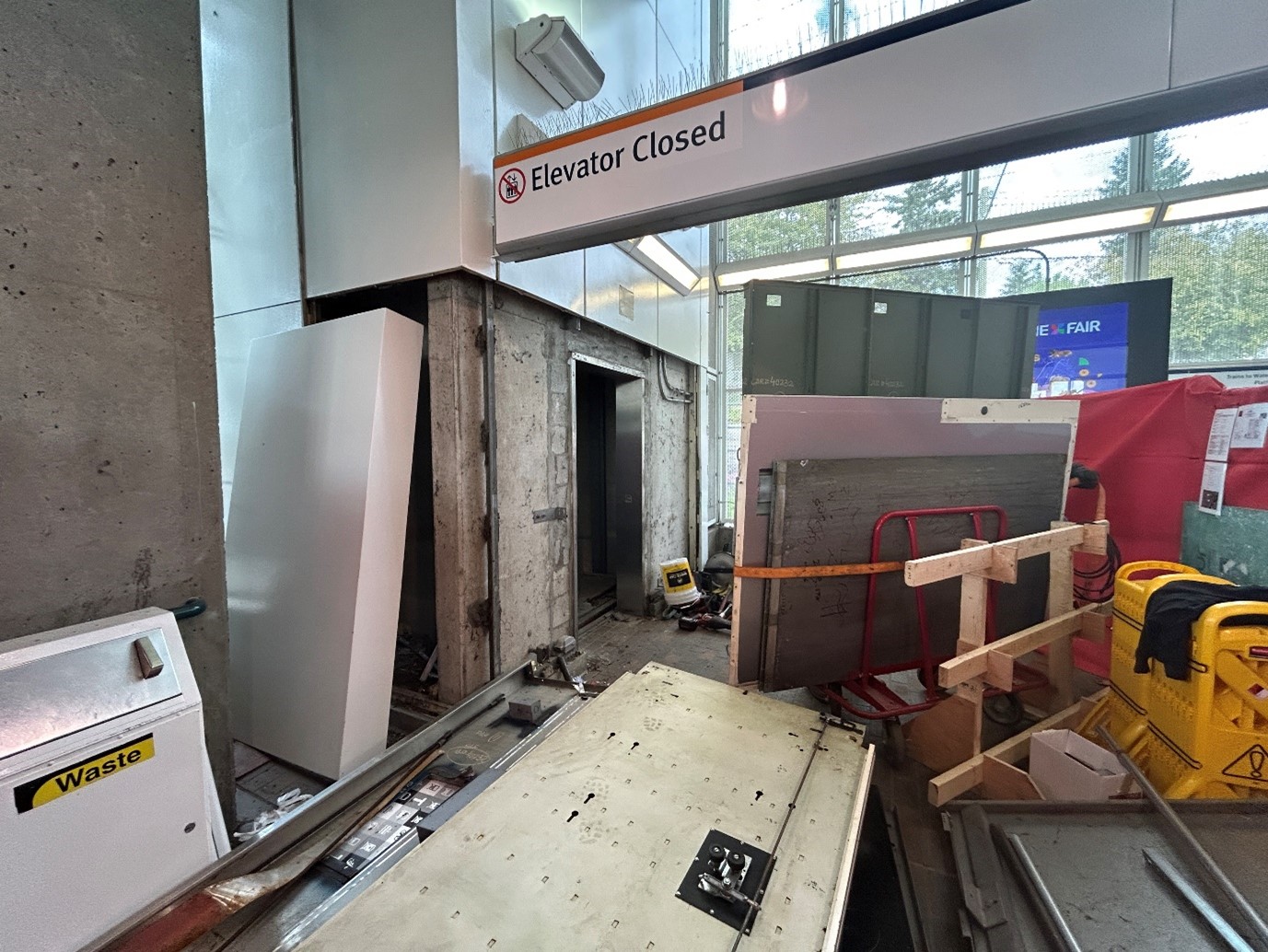
Once the shaft is hollowed out, it’s prepared for the new elevator and the existing guide rail for the elevator cab is inspected. New components are brought in and a new elevator is built inside again piece by piece from scratch on-site. That includes a new cylinder, piston and pump unit that powers the elevator, along with a new elevator cab and door system. In some cases, custom parts might even need to be manufactured.
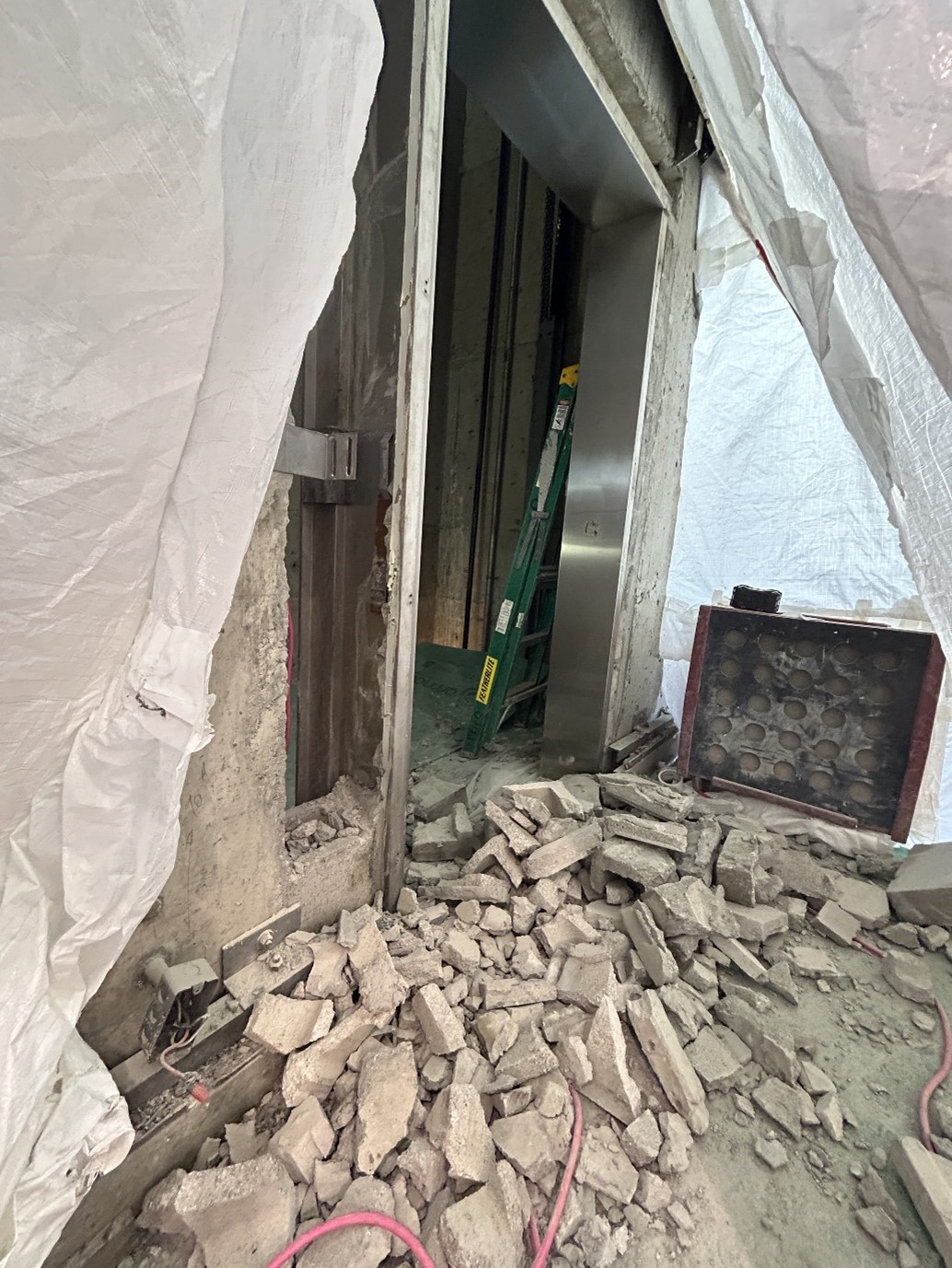
Afterwards, new electrical wiring, controller and safety systems are installed and integrated with the station. Following that, there’s thorough testing and certification needs to happen before the elevator can open for use. It’s a safety critical device.
They must comply with North America’s safety code for elevators and escalators, which contains more than 400 distinct sections and subsections outlining requirements.
We’re talking millimetres here as even a miniscule misalignment when the doors open is a safety hazard.
And fin!
Once complete, your new elevator have 20 per cent more room. You may be thinking, “Is that really a lot?” and yes, it is! To help with that visualization, the extra room could fit:
- Three standing adults;
- Two adults plus two children;
- Two adults plus a stroller;
- Two adults with rolling luggage;
- One or two wheelchairs/mobility devices;
- One adult with a bike;
- A medical stretcher; or
- Two Vancouver Canucks in full gear.
Not only that, but the elevator will also need less downtime for maintenance, minimizing outage impacts for both you and our staff.
Know before you go
Are you someone that relies on elevators? Sign up for Transit Alerts at translink.ca/alerts. We’ll text or email about changes to your station’s elevator.
Want to learn more about the Expo Line Elevator Replacement project and its impacts to you, including alternate travel options? Visit translink.ca/elevators.





Will this project include an elevator for the third platform at Stadium–Chinatown, allowing it to be used for passenger service after events at BC Place and Rogers Arena?
Waterfront 💀
Burrard 💀
Granville 💀
Stadium Chinatown (Which somehow is getting replaced) 💀
29th Avenue 💀
Patterson and Royal Oak 💀