
TransLink Podcast: What’s the T on the T?
TransLink Podcast: What’s the T on the T?
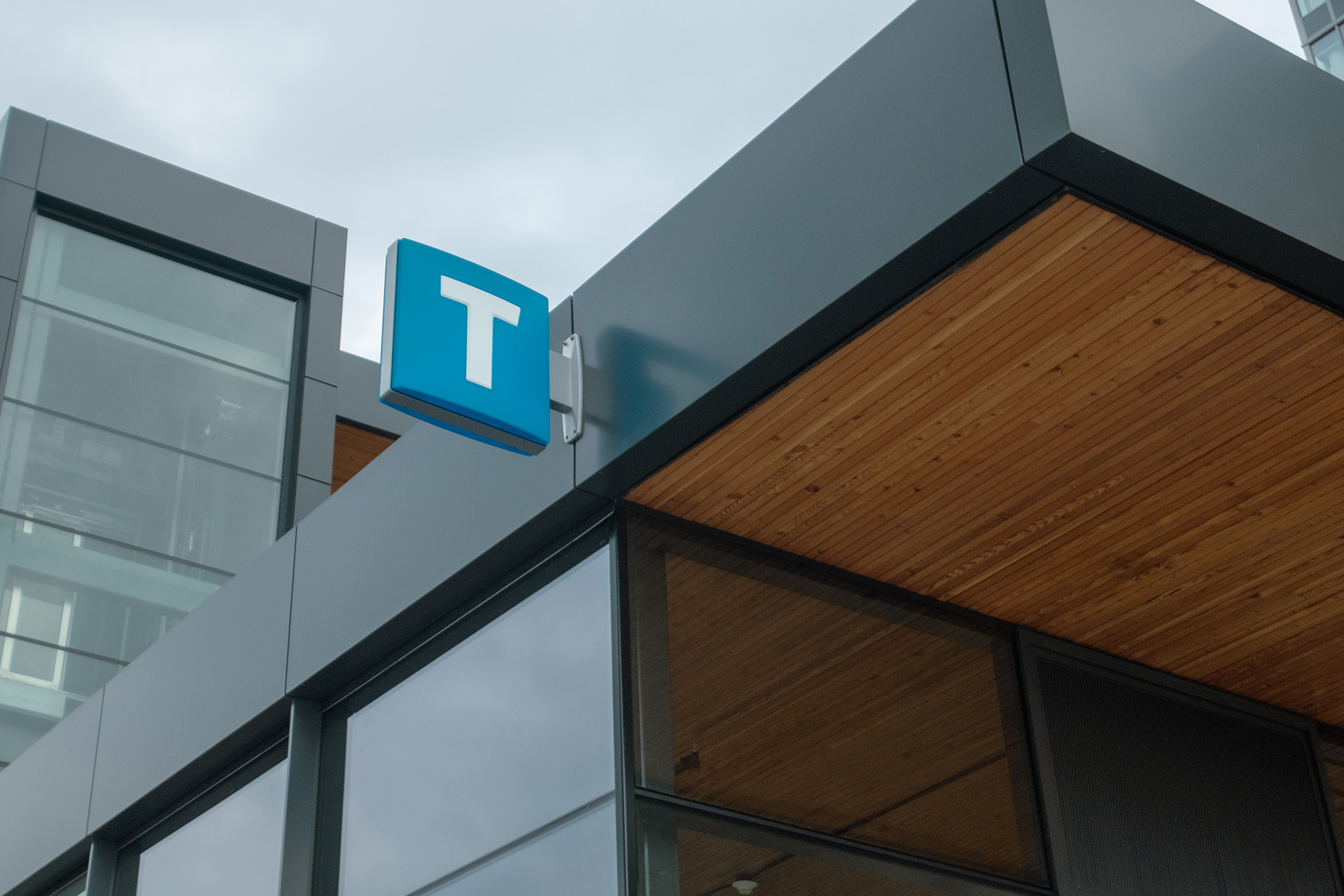
Think of the London Underground and you think of the blue, red and white roundel. In Metro Vancouver, it’s the white “T” on a blue square that’s the symbol for transit. We travel the world to learn about their transit symbols, before coming home for our story behind the “T.”
Come behind the scenes with us as What’s the T: the TransLink Podcast with Jawn Jang reveals the voices and stories that drive Metro Vancouver’s transit system forward. Subscribe and listen everywhere you get your podcasts, including Spotify, Apple Podcasts, and Pocket Casts!
Transcript
JAWN JANG: Hey, welcome to What’s the T: The TransLink podcast. I’m your host, Jawn Jang. Here’s what’s coming up on this episode.
[AUDIO EXCERPT PLAYS]: “Spill that tea. Tea. It’s not literally about spilling the tea. For us, it’s about getting together, spilling all of the gossip over a cuppa with your mates.”
JAWN: We finally spill the tea about the T. I’ll explain what I mean. Let’s tap into What’s the T.
VOICEOVER 1: The next station is.
[INTRODUCTION MUSIC PLAYS]
VOICEOVER 2: Welcome to What’s the T: the TransLink Podcast.
JAWN: There are some logos that are really and truly iconic. Take for example, some of the world’s biggest brands. You don’t know them just for their products alone, but because of their trademark logo. And that’ll range from pretty much everything Nike to Disney, McDonald’s, Ferrari, Louis Vuitton, and the New York City Subway.
[RECORD SCRATCH AUDIO PLAYS]: Wait, what?
Yeah. It’s true. Think about it.
Just like all those other brands, transit agencies and even specific modes of transportation have a logo or an icon. It’s what helps you identify if you’re getting close to a bus stop or transit hub. It’s how do you know the difference between taking a train or taking the bus in places all over the world? Because even if you don’t speak a specific language in a country, you might be traveling in, those icons should still be obvious and make sense right away when you get a chance to see them.
So, with that in mind, how does Metro Vancouver Blue and White Transit T logo actually hold up? You know what I’m talking about. The white T on a blue background telling you yes, this is the bus stop or yes, this is the Skytrain station that you need to be at. How do we compare to some of our fellow transit agencies like the London Underground or.
Yeah, the legendary New York City Subway? For this, we’ll bring back Jada Stevens, senior advisor for system customer experience and wayfinding at TransLink. Jada, you look at the London Underground, for example, here’s a transit system that has become synonymous with the city itself. What about their symbol or icon works just so well that it’s essentially grown beyond being a logo.
JADA STEVENS: So, London does quite a few things really well. And if we’re talking about customer experience or we’re talking about wayfinding, London has been kind of ahead of the game for quite some time. In regard to, information and displaying information to help people get, you know, from point A to point B. So, first, if we want to talk about what makes London.
So, so fascinating that, you know, in relation to this podcast is that they have, their identity, which is called the round out. So that’s the London Underground identity that you might be familiar with it. Essentially a circle with a horizontal bar across, across the centre of it. And it says underground. So, it’s, hugely, popular, representation of what London is, of the City of London.
So even though it represents transit, it actually also represents the City of London. And it’s kind of become its own major identity to some respect. So that’s what I’d love to talk about, because they really did, kind of brand their transit system really well, much earlier than really any transit agency that I’m aware of has done.
JAWN: Would you say they’re kind of the leading example. And so other transit agencies around the world, not just Vancouver, but maybe we look at places like New York, Paris, Tokyo, Japan, other places. They looked at that London model and thought, you know what? Yeah. If it’s not broken, don’t fix it. Let’s copy that.
JADA: Yeah. So, I think, you know, Vancouver, we certainly did when we were developing our t. When I’ve done research for this podcast on other, transit agencies around the world, London’s, you know, transit identity, the roundel, the London Underground is so secure as an identity that I really do think that they are a leader on that.
I’d be happy to share a little bit of information about that, logo, if you’d like to know. I’ve got, I’ve got a little bit of history.
JAWN: I’d love to. Okay. Yeah, let’s do it. Because I’m curious when you say that it’s iconic, if you go to London and you just start talking about the underground, they’re not confusing it with anything else. There’s really only one thing that you could possibly be mentioning.
JADA: Well, we actually ideally, the symbol represents all of the transit agencies in, in London. And that would be the bus, the trams. There’s the overground, there’s some ferry networks, there’s some rail, there’s the underground, which is the subway, the tube underground. But all of them are, they use, you know, the same roundel identity. So, back in 1908, I think it was London was building their first underground subway, and the subway service was actually run by a bunch of different, transit agencies.
But they were smart in 1908 that they were going to call that service the underground. So, no matter who was running it, it was still called the underground. Right. So it wasn’t that every single transit agency had branded, it separately. It was now called The Underground. But at the time, they were still using separate brands, separate logos, which is what I mean.
JAWN: Right.
JADA: But the name underground had been established for that kind of service type. It was it wasn’t until the 1920s, which was maybe ten, 12 years later, when they decided that they actually needed a logo that unified everything. So that’s 100 years ago. I mean, this is a long time ago. And the first, roundel was established at that time.
So, they actually designed a brand standard in 1920 for the London Underground Railroad. Yeah.
JAWN: Do you think they realized what they were doing, or did they just decide, like, you know, we’re going to start having to create, what, you know, signs, business logos and all these things. Like for us, we just got to put something together. Maybe they didn’t realize, like, how iconic this would actually turn out.
JADA: I have a feeling they didn’t. So, at the time, you know, advertising was becoming a bigger thing. A lot of brands were really focusing on developing brand and brand standards. And of course, London Underground did that. So, with the roundel, they established that the underground would, be signified with the round red circle and the blue bar across, and they determined the logo for the underground at the time.
But once again, they were only thinking of the left of the underground. So, it wasn’t until, the 1930s when it was decided that they should probably use the same logo for all the other transit services. So, they had bus, and they had tram, and they started developing, new variants of the roundel for bus and tram.
So, what they did is they kept the same, the same identity, but they used different colours. So, if I could look here, the bus is a red circle. Eventually they’ve developed it for all of the other modes as well. Bike is, a red circle with a white band, if I’m getting that right. The underground is red and blue, and trams, is green and red.
So, there’s all sorts of various different identities. I haven’t listed all of them for all of the modes, but essentially that, that symbol was expanded to represent all of the different modes. So, what’s really useful is, as a customer, if you’re approaching a bus stop, you see that same roundel identity as you would if you’re approaching a tram station.
Or if you’re trying to find a bike route or an underground station.
JAWN: Why is that so important? Like, why does that matter? Because if I am visiting London for the first time, you know, there’s so many different signs in general, period. Like whether it’s for busses or for fast food or for shopping or whatever. Why is it so important to have that consistency and what is happening like in the depths of our brain, that it kind of matters to us in a big way, right.
JADA: So if you’re traveling, you might be taking more than one mode. You might be, you know, now, I haven’t done this trip, so please don’t check to see if this is an actual trip. But you might be taking tram to the underground. Then you might be taking a bus, right? Or you might be hopping on to a, one of the ferries.
So, it’s really important that you can understand that you can do that, that these are all the same services that are actually provided by the same organization. So, I believe it was in 2000 when transport for London was established, which I’m sure we’ve all heard of, and they essentially manage all of the transportation modes in London. All of the street transit, all of the underground, all of the rail.
They even do pedestrian and cycling, transportation management. And so that same identity represents all of that in London. And as a user, it’s good to know that you can trust that you’re on an, an integrated unified system, that if you have an issue, you can contact the same, you know, customer information line. If you have a ticket, you can use it from one to the other.
JADA: There’s one website where you can find all the same information as a, as a user for the customer experience, it’s very important that, you know, you know, who to trust in terms of getting you from point A to point B, and that unified logo is, you know, a visual representation of that.
JAWN: Consistency and like seamless transitions. That’s right. Which I think is, yeah, very underrated. But extremely important part of any commuting experience. Again, there are those that are born in London, grow up in London, spent all their lives in London for them traveling on their system, it’s just second nature. But because London is, of course, one of the most, you know, iconic cities in the world, they get millions of people visiting every single year.
JADA: Right.
JAWN: And the reputation that all those people leave London with is, wow, that public transit system was really great.
JADA: That’s right.
JAWN: I rarely hear of friends who go to London and we’re like, man up the tube was not impressive at all. Like, it’s always like, wow, I can’t believe I rode on the historic tube or got it to be on the tram system.
Whatever it is. That’s why they are again, still like the head and shoulders. Example of how to do it right.
JADA: That’s right. For such an old system, they’ve really integrated that really, really well. And I still look to them for a as a great example of how you can, create an identity and create one that people love. Honestly, I sometimes just ride transit for the sake of it in London. Because it is an exciting experience.
JADA: I was one you hear about.
JAWN: I love to hear that because now I’m thinking, well, I wonder how many people ride transit in Metro Vancouver just because it’s iconic. It’s fun. It’s legendary. It’s Vancouver, it’s TransLink.
JADA: I’d love to hear about that.
JAWN: I would as well. So maybe you can, email us podcast@translink.ca. Okay. If this, actually applies to you. But with that in mind, before we come back to Vancouver after our lovely little trip there in London, is there any other transit agency around the world, Jada, that maybe is like a solid runner up to London in terms of brand identity, the reputation that they built for themselves like they have friends, maybe rivals across the channel there in Paris.
Is it New York? Japan? Where do you think? Okay. Who does the best? Second best job.
JADA: So you know who does the second best? I you know, I honestly couldn’t tell you, but I have done some research. I can tell you who do things differently. I can tell you who do things really well, perhaps we’d like to move on to Toronto. Okay. Which is, perhaps a little controversial. They have the TTC logo, which I expect when I mention that logo to you, it’s going to come to your mind, which is what’s important when discussing, brand identity or service.
Identity is that you understand what I’m talking about. Now, the reason why I say it’s controversial is because I think that a lot of people don’t like it, but I don’t think that’s the point today. I think what we’re trying to talk about is how effective the TTC has been in establishing their, their brand.
JAWN: That’s a very good point, because even if you don’t happen to like it, at least you recognize it. And you know what we’re talking about. But maybe describe for us, visually, for people that have never seen the logo before, what exactly is the TTC look?
JADA: So the TTC look is it’s red and white. It’s essentially a flag with the letters TTC in it, with a red band across kind of the centre of the flag. The colours red and white were chosen to represent the maple leaf of Canada. It the style of it is a little bit, perhaps Art Nouveau.
It’s not a modern logo at all. So the logo is meant to symbolize speed, movement, and transformation.
JAWN: Interesting.
JADA: So that’s what they had used as their brief when they developed the logo. So it was developed in 1954. What I love about it is that it was developed in-house by the designers or folks who worked at the TTC, so they didn’t go to some fancy agency and say design or something slick. They actually put pen to paper and they developed it themselves.
Another thing that I love about it is that we’re still using essentially the same logo. There have been some modifications over the years, but it’s still the same recognizable emblem that they developed in, 1954.
JAWN: What I think is interesting to me, as someone who, you know, is, is a very self-professed sports fan sports lover, is that the TTC logo to me looks like one of those European, football or soccer, club logos. And it has a distinctive look that if you saw it on a jersey, that badge, you would think, oh, that doesn’t look out of place at all.
JADA: But that’s a great point. What I feel about the TTC logo is that it has become such a recognizable brand that it represents Toronto to the same strength that the Toronto Maple Leafs logo.
JAWN: Yeah, one thing I’m noticing as we kind of look across different transit agencies with all their logos here, is that none of them feature really any mode of transportation in their logo. Right? Like you would think that, oh, you shouldn’t. It makes sense that the new York transit system, maybe they feature, a bus or a subway, or if you look at Paris like, you know, maybe they want to feature, a subway as well, but they moved away from that.
They don’t directly feature a transit vehicle in their logo. Why do you think that is?
JADA: It could be for the sake of technology is changing. Maybe, what a subway looks like. Changes, perhaps is too complex. There’s a bunch of different reasons. But then also over time, you know, New York City had a major rebrand in the 60s with their subway system. Paris, their, their brand isn’t very strong now.
It might be recognizable to folks who visit, but they haven’t necessarily built an identity. And like you say, yeah, they don’t have a picture of a subway in their logo. But if you want to talk about Paris, what’s so, fascinating about them is that, while they don’t have, a very strong brand, you might recognize some of the signs.
If I were just to explain them to you, I’m sure. So, in Paris, a lot of their subway stations will have a sign across the entrance that says Metropolitan in this beautiful Art Nouveau font. Green lettering, yellow background. Framed in, I’m going to say wrought iron Art Nouveau frame. And it’s iconic of Paris.
So that’s essentially their identity for, the subway system there. But it’s not useful on tickets. It’s not useful on maps. It’s not useful on signs. But that’s how you know, you found the station. Gotcha. They have an organization that runs all of transit in Paris called, Ile de France mobility. Sorry, I’m not saying that in French, but.
But they have a logo and they run the subway. They run the bus, but their logo is not really well-established as being the unifying identity for all of their modes. So they have, you know, while the, the Metropolitan signs in Paris are hugely beloved. It’s not a great identity. So I think that there’s an opportunity there for them if ever they had an identity crisis.
JAWN: Okay. We’ll take a quick pause here and maybe we’ll grab our passports, because when we come back, we’ll take a look at Tokyo and once again, try to see how the Tokyo Metro symbol holds up when compared to Metro Vancouver city.
Welcome back to What’s the T: the TransLink Podcast in conversation with Jada Stevens, talking about how transit system symbols or icons really work, and how Metro Vancouver’s Transit T symbol compares to other transit agencies.
JAWN: Jada, let’s quickly hop over the Pacific Ocean and take a closer look at Japan. The Tokyo Metro is legendary, known for its reliability, efficiency on time performance. They also have a very unique symbol, which looks like a white ribbon on a light blue background. It’s not too different from TransLink in some way. What are your thoughts on the Tokyo Metro?
JADA: Yeah, so Tokyo is actually a great example of, of how to do this, right? So, Tokyo actually established their logo kind of right at the very beginning. So I believe it was, but let’s just say the early 1900s. I don’t have the date here, but the M was established, when they built their first, Ginza Line, in Tokyo.
So when I’m talking about Tokyo, I’m talking about the Tokyo Metro. And the metro runs nine lines. They don’t run all of the subway lines there. They don’t run, overground transit, the bus network. The Tokyo Metro is really just a nine line system in Tokyo. However, it is the primary, transportation system in Tokyo that is used by the majority of people.
So I thought that that’s what we should be talking about today. So when, when the Ginza Line was opened, all of their all of their signs, were written in kanji. And so to some respect, that’s very useful, but it’s not, easily recognizable by all the users. And, you know, Tokyo is a world class city, so there’s people from all over the world using their system.
So they decided that they needed to create, an identity that was easily recognizable. And so that’s when they brought in the, which we know. So what I’ve learned about the Tokyo, it’s a it’s a blue background, similar to the TransLink T, the T for transit. It’s a it’s a white M, and the M is, is a swoopy kind of calligraphy.
And it’s meant to look like a heart.
JAWN: Really?
JADA: That’s right. So it’s, you know, to appreciate their customers, which gives me a bit of a warm, glowy feeling when I think.
JAWN: I, I appreciate that very much. Again, there’s another city that I’ve never visited before, but hopefully soon. Right. But I love that their look is really all about the customer. That’s right. And really trying to appreciate them because, I, I don’t know that most businesses think about using their logo to effectively say thank you to you, to, customers directly.
Like, and I’m talking even outside of transit agencies. Consumer grade, companies, they just don’t often use their logo for that. Usually it’s like someone’s name, or it might be some iconic look, like a crown, but this is a really nice thing.
JADA: I think it really attributes to the value system of the Japanese culture, and I love that they brought that in, and I love that they brought that into their transit network, to their subway network there. So when they establish the M as their brand, they also did a bit of a rebranding and they, established specific colours for each of their lines.
Right. So, like I said, they have to the into line, they have a bunch of other lines with, with names, but they decided they were also going to give each line a colour code and, an alphabetical code. So, the gender line is now also known as G. And it’s, it’s red. Right.
So you could recognize it. All of the other lines each have a, a, distinct letter, and its distinct colour.
JAWN: Right.
JADA: But those are all unified under the M.
JAWN: I love that a lot. Another city that maybe we should touch on simply because that I feel like they are similarly considered to be one of those iconic transit agencies, or they have a particular transit vehicle that is kind of just a self-explanatory it’s the New York City subway. So maybe take us through, like what the New York City system does. Well, the MTA and, how it compares to a place like London and also how we compare it to a place like New York.
JADA: Okay, so the New York City MTA, they run the subway, they run the bus. They are the transit network. There. But they actually don’t have a cohesive brand between the bus and the subway. But when you think of New York City, you do think about the subway brand. It is iconic like London and the underground. It the New York City subway, you know, look and feel has become ubiquitous with New York City.
And to explain it, to get a vision in your head, it was established. It was developed in the 60s, the New York City kind of subway identity by Massimo Vignelli. And he determined that subway signage would have a black background and, it would use Helvetica text, which was, kind of a new modern font at the time, white Helvetica text.
And there was no logo developed.
JAWN: Yeah.
JADA: But what they did do is they created, a unique kind of letter code and colour for all of their subway lines. So if you’re standing outside of a subway station, the way you recognize it is with that black background sign with the word subway in white, Helvetica, and then you’ll see, kind of icons of the subway lines that, that station, services.
So you might see that, that the a, the B line, the C line and those lines all have a unique. Most of those lines will have a unique color. But then the bus service, unfortunately, is completely different. Still run by the end. And MTA. But that’s going to be a blue background with white text.
Once again, no real logo, no real identifier for that, for that service. And it’s not cohesive with the subway system.
JAWN: How many brands are known mostly for, like the font they use as opposed to the logo that they are just kind of all encompassing, like the design of a look like we mentioned Toronto and the badge and the letters all kind of hugging together. New York’s I’m just going to say it, it feels and sounds a little plain, but it’s so effective. Maybe because it’s plain?
JADA: I think you’re right. I think it is effective because of its simplicity. At the time, you know, when the identity was established, we were really going through this phase of modernism, and that was to remove all embellishment. Right? And maximal Vanilli removed all embellishment to the point that you didn’t even establish a logo. It was just this is just going to be text.
We’re just going to use Helvetica. That’s going to be our identity. So it, it it is common. And some brands do it better than others. But I think that, the majority of, of transit networks will have some kind of emblem or image or letter or something to establish it. In terms of transit, I think that New York City is is pretty unique in that they don’t necessarily have a logo.
JAWN: I remember when I, immigrated here to, Metro Vancouver, Jada, that when our family was looking to go on a trip to, like, Lougheed Town Centre waiting for the bus. The bus stops today look very different from bus stops, even in the 90s, because back then the T wasn’t around.
JADA: So that’s right.
JAWN: Maybe explain to us why it was important for TransLink to develop this look, instead of just sticking to what they had already growing up in the 90s and early 2000.
JADA: Transit in Metro Vancouver has had a long history, and it’s been managed by various different operating companies. And over the years, those operating companies either, ran those modes under their own logo or they established, an independent identity form mode. So, and it was really important that we, took a closer look at how we were communicating transit as a service to our customers so that you could easily, understand that this is, you know, a TransLink service.
So the initiative that really helped us jump off was the Olympics in 2010.
JAWN: Right.
JADA: So prior to that, you know, we understood that we were going to have, you know, hundreds of thousands of visitors here and ideally they would be taking transit. So there was a lot of research that was done before the came along. Of course, you know, a lot of transit agencies will use an M for Metro,
JAWN: Right.
JADA: Which doesn’t necessarily mean subway. It doesn’t necessarily mean underground. It could, you know, represent their entire transit service. So we had considered, that at one point. But I think that, at the end of the day, we wanted to stand out a little bit more and maybe not do an M, and maybe the M’s been overdone.
JAWN: Right.
JADA: And I was actually doing some research today, and there’s close to, 75 or 80 different transit agencies that use the, so how do you do something different when everybody else is doing it? Right? Right. So we thought the T is perfect because T stands for transit. And what we loved about it is that, as the T as a simple identity, it’s really only 2 or 2 lines that we would have to design.
T is recognizable if you don’t speak English. If you don’t read, it’s an easy, symbol to understand. And so that’s where we started doing our design research was with the letter T.
JAWN: I want to challenge you. Then when we think about the Olympics, pretty soon, just over, around a year again, from the time of this recording, we have another international sports tournament coming to Vancouver, the FIFA World Cup. Again, many people from around the world expect it to be here as visitors, maybe arriving in Vancouver for the first time.
How do you think? How do you think our T will hold up now the all these years later? Do you think we can still improve? Is there areas that we’re looking to try and make sure the we can do an even better job of, of wayfinding and helping people like that.
JADA: So my opinion is that I feel that the T is pretty strong. We don’t have an intention of changing it. We can always make the brand stronger. Of course we could. We could always have more people recognize the symbol. But the symbol itself, has been well adapted and applied across our region. And we continue. We plan on continuing to do so.
We will continue to use the T to represent transit. You will see it at station entrances. You’ll see it at bus stops. You will see it, on, the uniforms of staff, you know, where needed. You’ll see it at our TransLink Customer Service Centre. It’s growing as a brand. So I think yeah, I think that that we haven’t really found that it is weak by any means and that maybe we need to pivot and make a change.
It’s actually done a great job in establishing itself in our region.
JAWN: Love it. I mean, again, when you’re just visiting here for the first time, you might not realize how much thought and how much work went into creating, the transit system logo here, the blue and the blue and white T but when you really stop and think about it and realize the job that it has. Yeah. To quickly convey that kind of information within seconds.
JAWN: Yeah, it’s really fascinating stuff.
JADA: Well, one of the, primary principles of the work that I do is to make it make this our service so easy that our customers don’t have to think. Right?
JAWN: Right.
JADA: And so if you’re looking for a station that’s half a block away, you want to see in a blink of an eye, we just want to get you there is easily as stress free as possible.
JAWN: Our TransLink T is there. Is there a particular font that we chose for that T alone, or is it kind of just a design that came up?
JADA: So, it is it’s derived from Meta, which is a font. It’s the same font that we use.
JAWN: Not associated to like Facebook or by the way, that’s the name of the front we use.
JADA: Pre-Facebook. They saw us and they took it from us. So that’s right. So we actually use the font, for all of our wayfinding, and for all of our other modes that are branded Millennium Line, SeaBus etc., they use that same typeface. So essentially it’s just the T. I don’t believe it has been manipulated in any way. And voila, there’s our logo.
JAWN: Comic sans didn’t make the cut?
JADA: No.
JAWN: Comic Sans might not be relevant these days, but the blue and white transit T that you see all around Metro Vancouver certainly is. And that brand recognition that ability to instantly recognize transit property that didn’t happen overnight. Transit agencies around the world work hard to move thousands and thousands of customers like yourself every single day, but they’re also trying to cut through the clutter, the clutter that is the thousands of logos, symbols, icons, and brands that you see with your own eyes every single day.
Because by having an instantly recognizable transit symbol, it provides clarity and a sense of knowing that you are exactly where you supposed to be heading, exactly where you’re supposed to go. My thanks to Jada Stevens, the senior advisor for in-system customer experience and wayfinding at TransLink, for a fun trip around the world on this episode, taking a look at all the different transit agencies and their symbols and logos.
My thanks to producers Allen and Sydney for their iconic roles working away on this podcast, and of course, my thanks to you for listening and subscribing. I’ve been your host, Jawn Jang. And until next time, have a safe trip.